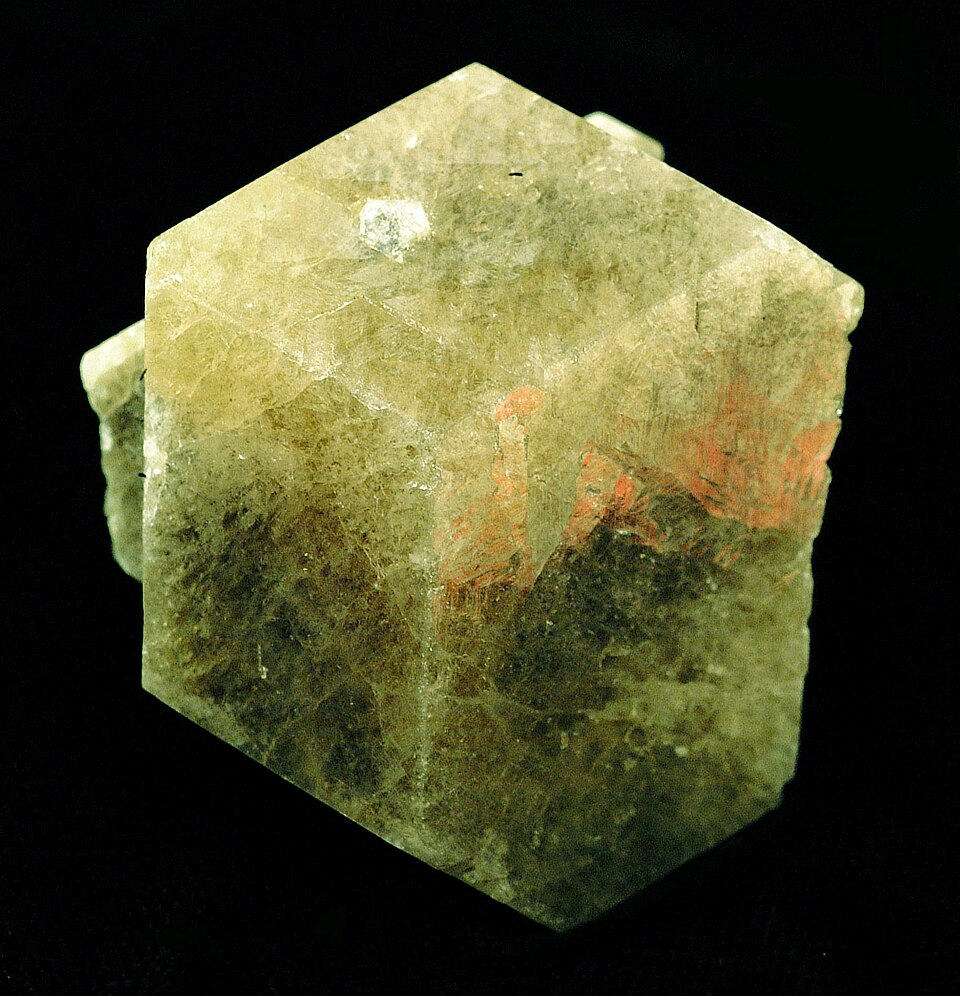
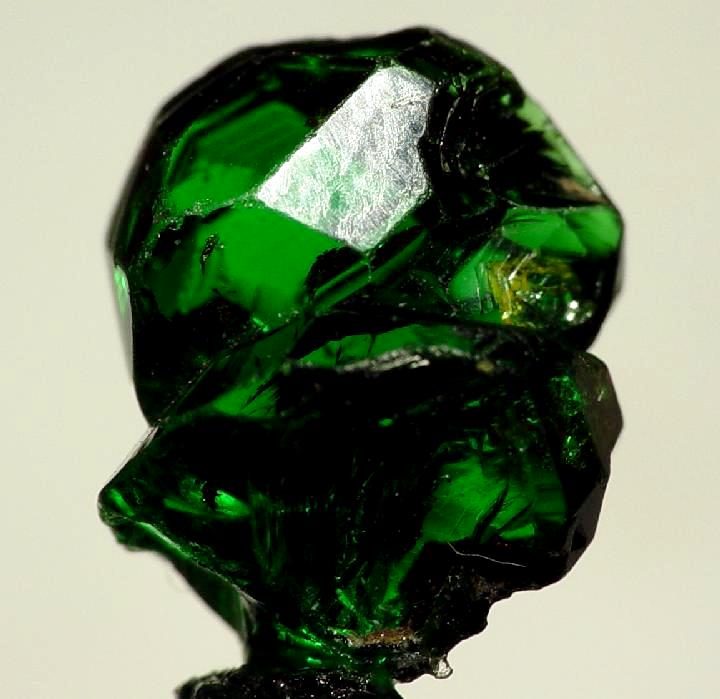
Tsavorite Garnet
Granato Tsavorite
Ca₃Al₂(SiO₄)₃ Properties
- Category
- Gem
Tsavorite is a variety of garnet with an intense green color, composed of calcium and aluminum silicate, owing its name to the Tsavo Valley in Kenya, where it was discovered in the 1960s. With a hardness of 7.5 on the Mohs scale, it is a precious but delicate gemstone, prized by collectors for its rarity and brilliance.
Tsavorite is a chromatic variety of grossular garnet, a complex silicate belonging to the garnet group, in which calcium and aluminum coordinate in a highly symmetric cubic structure. The characteristic emerald-green color derives from the presence of trace amounts of chromium and vanadium, elements that partially substitute aluminum in the crystal structure. Discovered in 1967 in the Tsavo Valley at the border between Kenya and Tanzania, tsavorite remains an extraordinarily rare gemstone: known deposits are limited to a few localities in East Africa, primarily in Kenya (Merelani Hills, Tsavo East), with occasional production from Tanzania. Unlike common red garnets, tsavorite is highly sought after by gemologists and collectors for its transparency, almost imperceptible pleochroism (variation in color observed from different angles), and high refractive index (1.71–1.74), which imparts a brilliance superior to many other natural greens. However, a hardness of 7.5 Mohs makes it more vulnerable than diamond and ruby, requiring care in setting and cleaning.
Tsavorite is a variety of grossular garnet with the formula Ca₃Al₂(SiO₄)₃, crystallizing in the cubic system (space group Ia3d). The chromophoric elements are Cr³⁺ and V³⁺, which occupy octahedral sites in the structure. Optical properties: refractive index nω = 1.714–1.738 (variable with iron content); dispersion (v) ≈ 0.027 (superior to diamond, v = 0.044); relative density 3.61–3.73 g/cm³; pleochroism weak (yellowish-green to green). Mohs hardness 7.0–7.5; conchoidal fracture; cleavage absent (characteristic of the cubic system). UV-Vis spectroscopy shows characteristic absorption bands at 420 nm (Cr³⁺) and 600 nm (V³⁺). Fluorescence under long-wave UV light is generally absent or very weak. Thermal stability: tsavorite is sensitive to abrupt thermal changes; ultrasonic cleaning is not recommended. Common inclusions: apatite, magnetite, phlogopite. Distinction from emerald: tsavorite exhibits visible chromatic dispersion (emerald does not) and lower density (emerald ~2.76 g/cm³). No commercial synthetic variety exists; treatments are rare, although surface diffusion has been occasionally documented.
Mining localities
- Tsavo East, Kenya (località tipo; produzione attuale molto limitata)
- Merelani Hills, Tanzania (depositi associati a marmo metamorfico)
- Umba Valley, Tanzania (produzioni sporadiche)
- Voi, Kenya (storicamente importante, oggi quasi esaurito)
Frequently Asked Questions
What is the hardness of tsavorite garnet and how should you clean it without damaging it?
Tsavorite has a hardness of 7.5 on the Mohs scale, making it suitable for rings but more fragile than diamond. It is recommended to clean it gently with lukewarm water and neutral soap, avoiding ultrasonic cleaners and hot steam which can cause internal fractures, especially if the gem contains natural fluid inclusions.
Why is tsavorite so rare and what is its price per carat?
Tsavorite is rare because it forms only under specific geological conditions in very few locations worldwide, primarily in Kenya and Tanzania, representing less than 1% of global garnet deposits. Prices range from €500 to €3000 per carat depending on color quality, clarity, and size, with excellent quality specimens commanding even higher prices.
How can you identify authentic tsavorite from imitations or other green gemstones?
Authentic tsavorite displays a brilliant emerald-green color with characteristic light dispersion (fire) visible even to the naked eye, while glass imitations lack this optical property. Gemological analysis using a spectroscope and density determination (3.61-3.73 g/cm³) are the most reliable methods to certify authenticity, as tsavorite has a unique chemical composition Ca₃Al₂(SiO₄)₃ distinguishable from other green garnets such as emerald or hiddenite.
Which jewelry pieces are best suited for tsavorite and what settings protect the gem?
Tsavorite is ideal for pendants, brooches, and earrings where it is protected from accidental impacts, while rings require protection with bezel settings (which completely surrounds the gem) rather than simple prong settings. Noble metals such as 18k gold, platinum, or sterling silver preserve the gem's value and protect its more fragile edges from daily pressure.
Entry generated with Claude API (Anthropic) on data extracted from Mindat, RRUFF and Wikipedia. Not yet reviewed by a human expert. Verify data against original sources before citing in formal work.