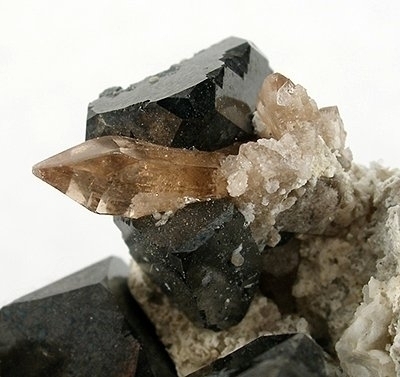
Topaz
Topazio
Al₂SiO₄(F,OH)₂ Properties
- Category
- Gem
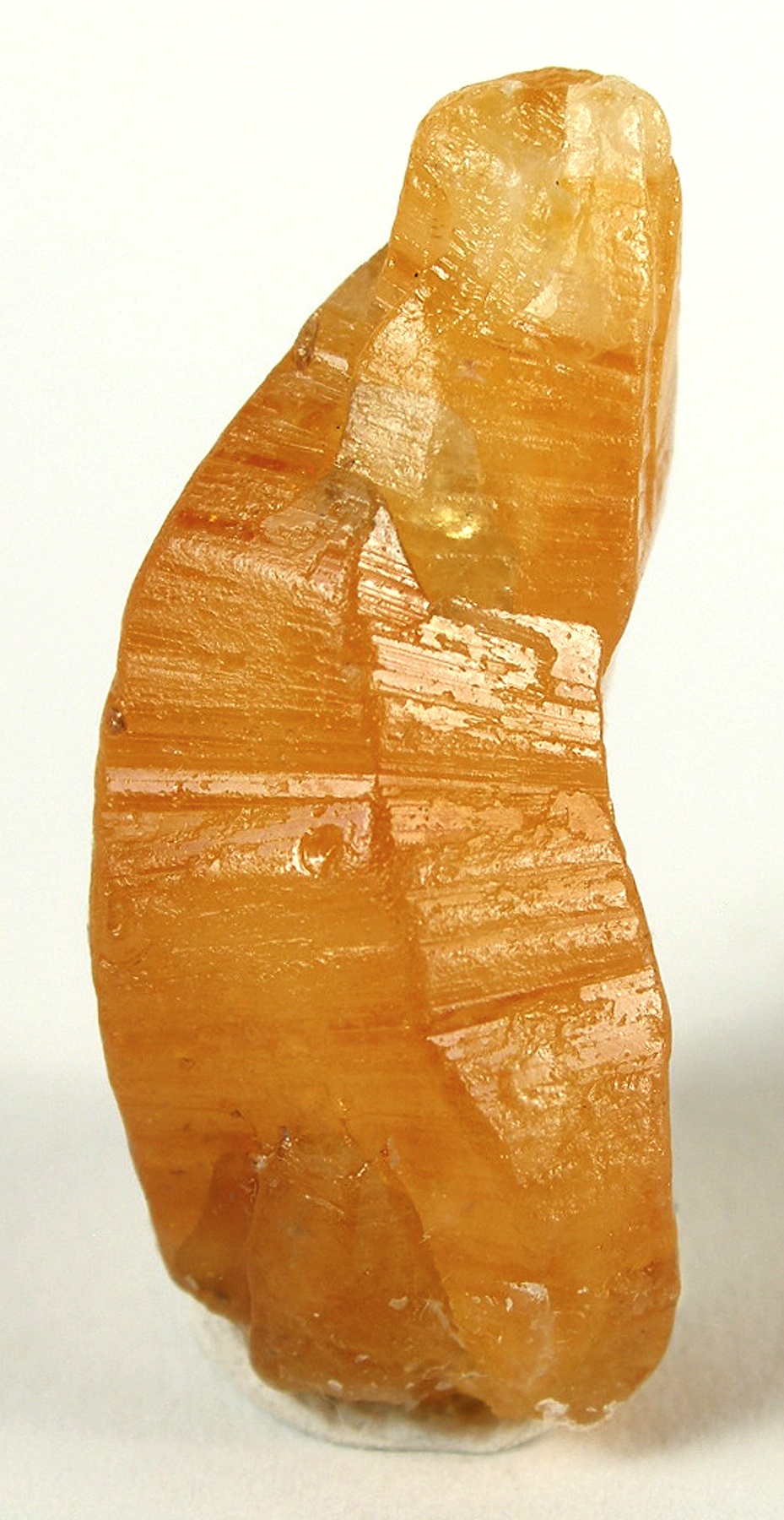
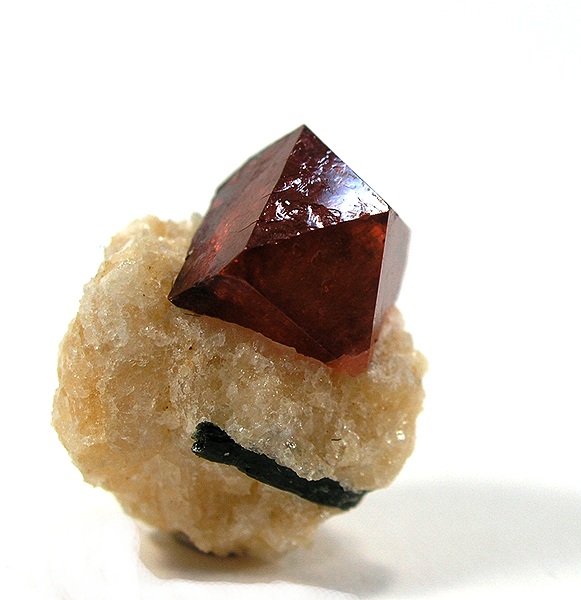
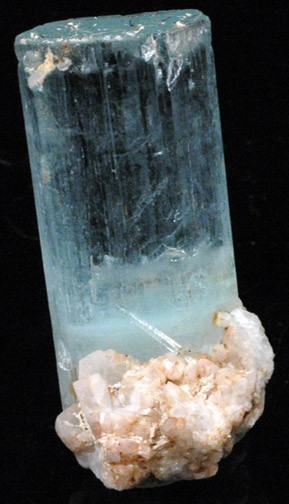
Topaz is a transparent and extremely hard aluminum silicate (8 Mohs) that forms in acidic igneous rocks; prized for millennia as a precious gemstone, it can be colorless, yellow, blue, pink, or red depending on the impurities present.
Topaz is an aluminum and fluorine silicate with the formula Al₂SiO₄(F,OH)₂, crystallizing in the orthorhombic crystal system as prismatic crystals that are often well-defined. Its hardness of 8 on the Mohs scale makes it ideal for jewelry, second only to diamond and corundum among natural gemstones. It forms predominantly in granitic pegmatites and acidic igneous rocks, often in association with quartz, feldspar, and muscovite. Colors vary extraordinarily: imperial topaz (yellow-orange) remains the most sought after by collectors, while blue topaz (often treated with irradiation) dominates the contemporary market. The most prized geographic origins include Ouro Preto in Brazil (historically the primary source), Afghanistan, Myanmar, and Pakistan, where specimens of superior gemological quality are found.
Crystal system: orthorhombic, space group Pbnm. Lattice parameters: a = 4.65 Å, b = 8.80 Å, c = 8.39 Å. Density: 3.49–3.57 g/cm³. Mohs hardness: 8 (perfect cleavage along (01)). Refractive index: nα = 1.606–1.629, nβ = 1.609–1.631, nγ = 1.616–1.638 (birefringence 0.010–0.016). Dispersion: 0.014. Marked pleochroism (blue, yellow, pink according to crystallographic axes). Composition varies with the F/OH ratio; fluorine promotes transparency and color stability. Natural yellow color is due to lattice defects and trace amounts of iron (Fe³⁺); blue is induced by high-energy particle irradiation (neutrons or electrons). UV spectroscopy: yellow fluorescence under long-wave UV (366 nm) for untreated specimens. Polarized light microscopy reveals two-phase fluid inclusions typical of pegmatites. Distinguishing natural from synthetic topaz requires FTIR spectroscopic analysis and precise density measurements.
Mining localities
- Ouro Preto, Minas Gerais, Brasile (topazio imperiale di qualità gemmologica superiore)
- Gilgit-Baltistan, Pakistan (topazio blu e incolore in cristalli voluminosi)
- Mogok, Myanmar/Birmania (topazio rosa e rosso, rarità commerciale)
- Shyok Valley, Ladakh, India (topazio blu in pegmatiti granitiche)
- Teofilo Otoni, Brasile (principale fonte contemporanea di topazio da taglio)
- Ural, Russia (topazio giallo in associazione con berillo e feldspato)
- Mourne Mountains, Irlanda del Nord (topazio incolore in pegmatiti)
- San Luis Potosí, Messico (topazio giallo in cavità vulcaniche)
Frequently Asked Questions
How much does topaz cost and where is it found?
Topaz prices vary significantly: colorless specimens cost 10-50€ per carat, while intense blue topaz and pink-red varieties reach 100-300€ per carat. The world's major deposits are in Brazil, Afghanistan, Madagascar, and Nigeria, with smaller quantities found in Tuscany and the Alps.
How is topaz formed and what is its chemical composition?
Topaz is an aluminum silicate with chemical formula Al₂SiO₄(F,OH)₂ that crystallizes in fluorine-rich acidic igneous rocks, especially in pegmatites and hydrothermal veins. Different colors arise from impurities: iron causes yellow shades, chromium produces pink-red tints, while blue results from natural or heat-induced lattice defects.
How to identify authentic topaz and what is its hardness?
Authentic topaz has a hardness of 8 on the Mohs scale, making it very scratch-resistant but surpassed only by diamond (10) and corundum (9). To identify it: observe its crystalline transparency, high specific gravity (3.5 g/cm³), characteristic conchoidal fracture, and absence of optical birefringence; additionally, genuine topaz resists scratching from a copper coin.
What is the difference between natural and treated topaz?
Natural topaz is extracted already colored, but the vast majority of blue topaz sold commercially is obtained by irradiating colorless natural topaz with gamma rays or electron beams, followed by heating. This treatment is permanent, legal, and disclosed by merchants; treated topaz is less valuable than naturally colored varieties such as the rare imperial pink-red topaz.
Entry generated with Claude API (Anthropic) on data extracted from Mindat, RRUFF and Wikipedia. Not yet reviewed by a human expert. Verify data against original sources before citing in formal work.