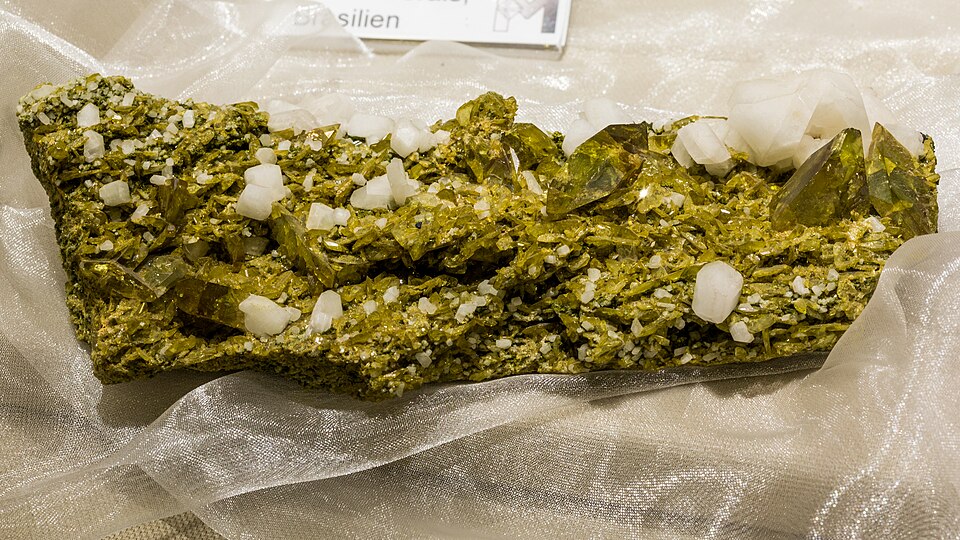
Titanite
Titanite
CaTiSiO₅ Properties
- Category
- Gem
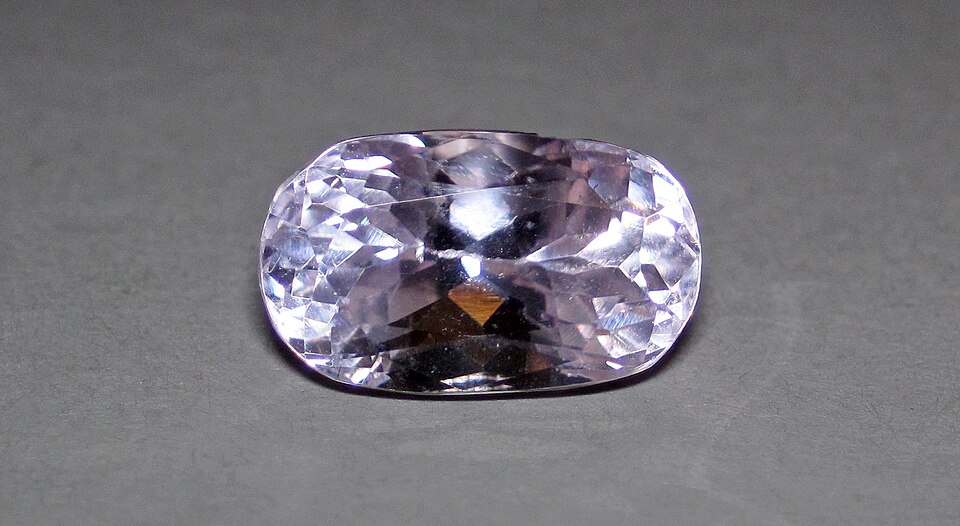
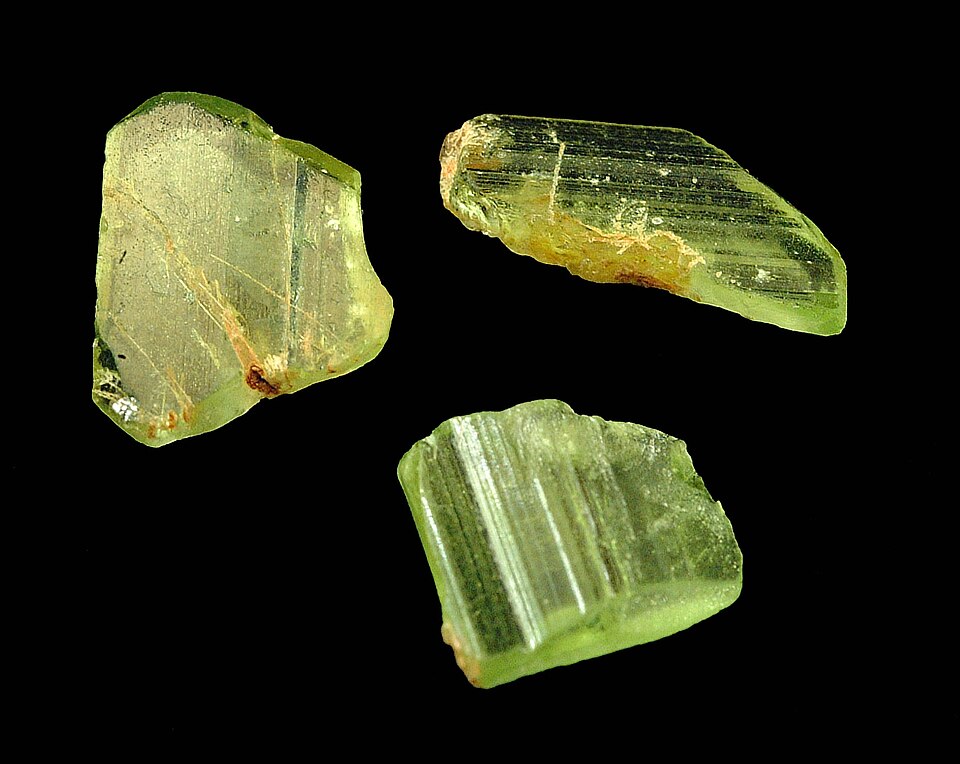
Titanite (or sphene) is a calcium titanium silicate that forms yellow, brown, or red crystals characterized by extraordinary brilliance and marked pleochroism (color variation with viewing angle). It is prized by collectors for its rarity and optical dispersion superior even to diamond.
Titanite, whose name derives from the titanium that comprises 25% of its composition, is a monoclinic silicate (CaTiSiO₅) that crystallizes in characteristic wedge-shaped forms, from which the ancient Greek name sphene (wedges) is derived. When of gemological quality, it exhibits exceptional chromatic dispersion (fire) of 0.051, superior to diamond's 0.044, rendering it extraordinarily brilliant under incident light. Tricolor pleochroism is marked: yellow, brown, and red are observable when rotating the crystal. Although its hardness of 5–5.5 Mohs makes it fragile for daily-wear rings, it is highly sought after in collecting and fine jewelry for protected pieces. The most prized origins come from the Alps (Switzerland, Austria), Norway, and Madagascar; the most transparent and deeply colored specimens command significant prices in the specialized market.
Titanite crystallizes in the monoclinic system, space group P2₁/a, with unit cell parameters: a = 7.07 Å, b = 8.71 Å, c = 6.57 Å, β = 113.8°. Relative density is 3.48–3.55 g/cm³. Refractive indices: nα = 1.900, nβ = 1.907, nγ = 1.944; birefringence Δn = 0.044 (high). Optical dispersion (fire) = 0.051 (B-G). Triaxial pleochroism is intense: X (straw yellow), Y (yellow-brown), Z (red-brown). Cleavage is imperfect along 110. Mohs hardness 5–5.5; tenacity fragile. Luster adamantine to resinous. Often fluorescent under UV (yellow, orange). Titanite forms in metamorphic environments (schists, marbles, gneisses) and in pegmatitic igneous rocks; common associations include feldspars, quartz, mica, and garnet. Composition is sometimes variable through isomorphic substitution of Fe³⁺ and Al for Ti, and trace rare earth elements. Raman spectroscopic analysis shows characteristic bands at ~911 cm⁻¹ (Si-O stretching), ~470 cm⁻¹ (Ti-O bending).
Mining localities
- Alpi Svizzere (Binntal, Vallese) — cristalli gialli e marroni di eccellente qualità
- Norvegia (Tvedalen, Telemark) — titaniti rosse trasparenti di pregio gemmologico
- Madagascar (Andapa, provincia di Sava) — esemplari gialli brillanti e di grandi dimensioni
- Austria (Zillertal, Tirolo) — associazioni alpine in gneiss e marmi
- Canada (Ontario, Quebec) — pegmatiti con titaniti di collezione
- Brasile (Minas Gerais) — titaniti gialle in rocce metamorfiche
- Pakistan (Karakoram) — cristalli in pegmatiti alpine
Entry generated with Claude API (Anthropic) on data extracted from Mindat, RRUFF and Wikipedia. Not yet reviewed by a human expert. Verify data against original sources before citing in formal work.