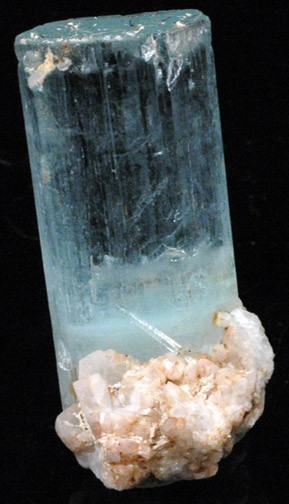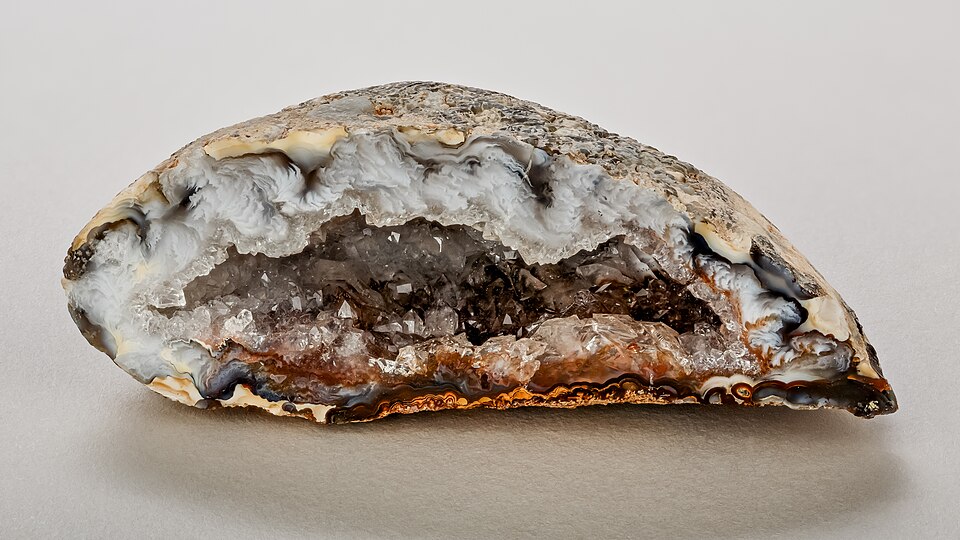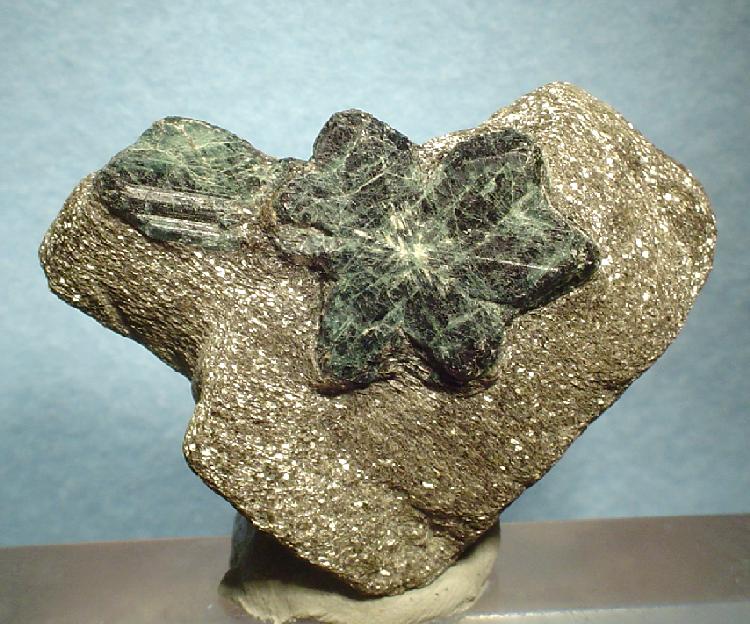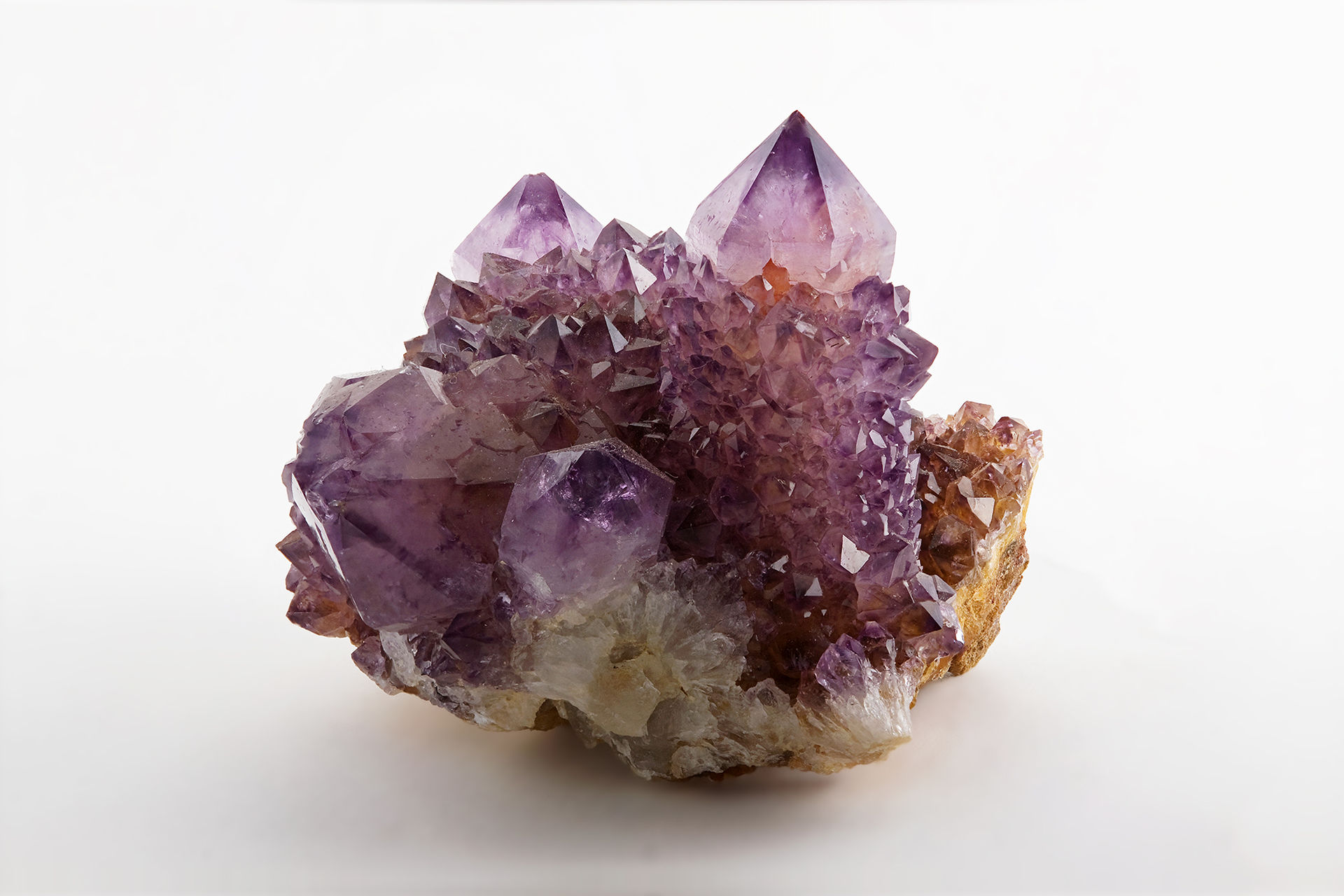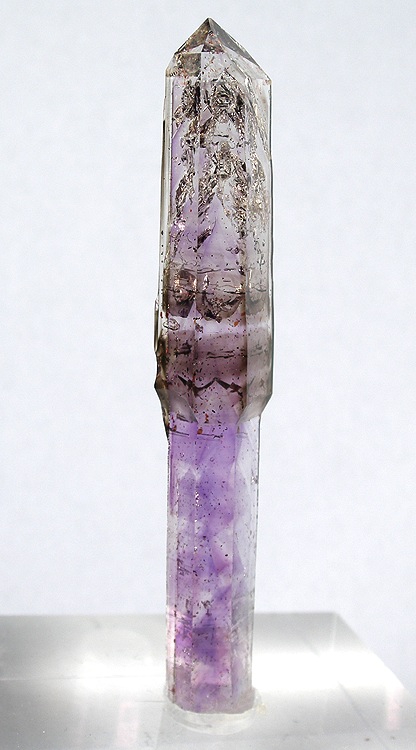
Smoky Quartz
Quarzo Fumoso
SiO₂ Properties
- Category
- Gem
Smoky quartz is a variety of quartz (SiO₂) colored by traces of aluminum and natural radiation, which impart a characteristic smoky brown-gray tonality. It is one of the most widespread quartz varieties in nature and is appreciated by collectors for its subtle elegance.
Smoky quartz owes its distinctive color to lattice defects induced by natural radiation (gamma rays and cosmic rays) that trap electrons within aluminum ions substituting silicon. This process, called a color center, is reversible: exposure to UV radiation or heat can fade or reverse the coloration. It forms in pegmatitic and hydrothermal environments, often associated with feldspars and micas. It is the official quartz of Scotland and Switzerland. In the gemological market, the most prized specimens come from the Alps (Switzerland, France), Brazil, and the Ural Mountains, where they achieve exceptional transparency and deep coloration. It is frequently used in jewelry for rings and pendants, with prices that are highly accessible compared to other gemstones.
Crystal system: trigonal (space group P3₁21 or P3₂21). Hardness: 7 Mohs. Density: 2.65 g/cm³. Refractive index: nω = 1.544–1.553, nε = 1.553–1.554 (uniaxial positive). Birefringence: δ = 0.009. UV-Vis spectroscopy: characteristic absorption bands in the 220–250 nm range due to color centers (F and F⁺ defects). Coloration is sensitive to heating (discoloration at T > 300 °C) and UV radiation. ESR (electron spin resonance) analysis reveals the presence of trapped Al³⁺ ions and O⁻ ions in point defects. Common inclusions: rutile needles, hematite, chlorite. Origin of coloration: isomorphic substitution of Si⁴⁺ by Al³⁺ with charge compensation via electron holes (hole centers) stabilized by natural radiation. Typical mineral associations: alkali feldspar, mica (biotite, muscovite), tourmaline, apatite.
Mining localities
- Alpi Svizzere (Uri, Vallese) — cristalli trasparenti e ben formati
- Monti Urali (Russia) — esemplari di qualità gemmologica superiore
- Brasile (Minas Gerais, Bahia) — quarzi fumosi di grandi dimensioni e colore intenso
- Scozia (Cairngorms) — quarzi fumosi storici e culturalmente significativi
- Madagascar — depositi pegmatitici con cristalli di eccellente qualità
- Colorado (USA) — associazioni con feldspato alcalino in pegmatiti
- Francia (Alpi francesi) — cristalli alpini di pregio collezionistico
Frequently Asked Questions
How is smoky quartz formed and what gives it its color?
Smoky quartz (SiO₂) obtains its brown-gray smoky coloration from traces of aluminum within the crystal structure, activated by natural radiation from surrounding rocks. This radiation ionizes aluminum atoms, creating stable color centers that produce the characteristic hue. The process takes millions of years and typically occurs in granite and pegmatite-rich environments.
Where is smoky quartz found and what is its price?
Smoky quartz is one of the most abundant quartz varieties in nature and is mined at numerous worldwide locations, including Brazil, Madagascar, Switzerland (Alps), and the United States. Price varies significantly based on quality, transparency, and size: small raw crystals cost just a few euros, while well-formed gem-quality specimens can reach 20-100 euros per carat.
How to recognize authentic smoky quartz from a counterfeit?
Authentic smoky quartz has a hardness of 7 on the Mohs scale and a specific gravity of 2.65 g/cm³; it is also piezoelectric, generating electrical charge under pressure. To identify it, check transparency to light (should be translucent, not opaque like some imitations), perform a specific gravity test, and consult a gemologist to rule out artificially irradiated or dyed quartz.
What is the difference between natural smoky quartz and heat-treated quartz?
Natural smoky quartz acquires its color through natural radiation accumulated over millions of years, while heat-treated smoky quartz is artificially heated to intensify or modify existing color. Both have the same chemical composition (SiO₂) and physical properties, but heat treatment is a common practice in the gemstone market and is generally considered acceptable if disclosed by the seller.
Entry generated with Claude API (Anthropic) on data extracted from Mindat, RRUFF and Wikipedia. Not yet reviewed by a human expert. Verify data against original sources before citing in formal work.