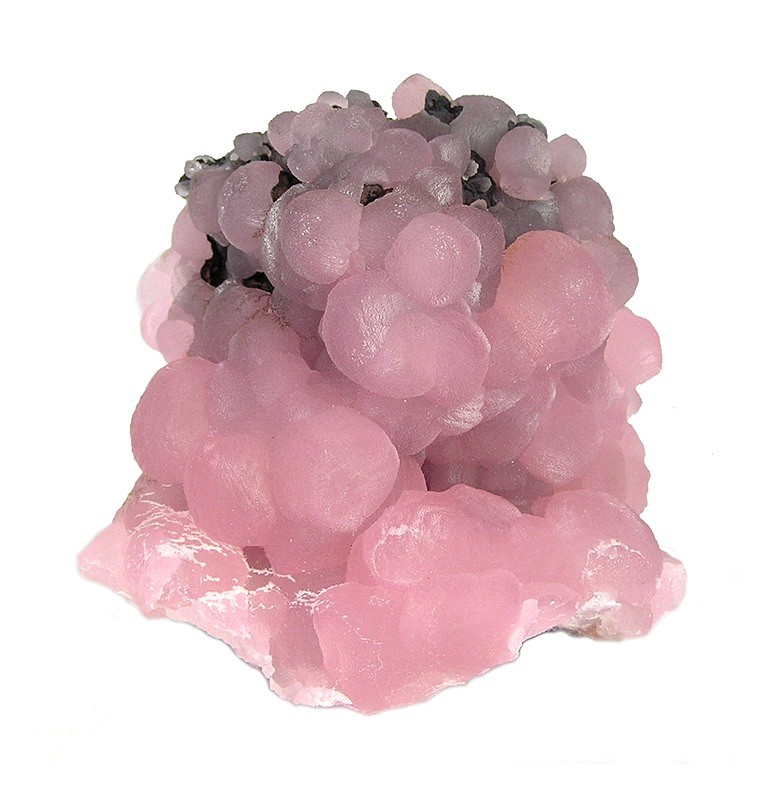
Smithsonite
Smithsonite
ZnCO₃ Properties
- Category
- Mineral
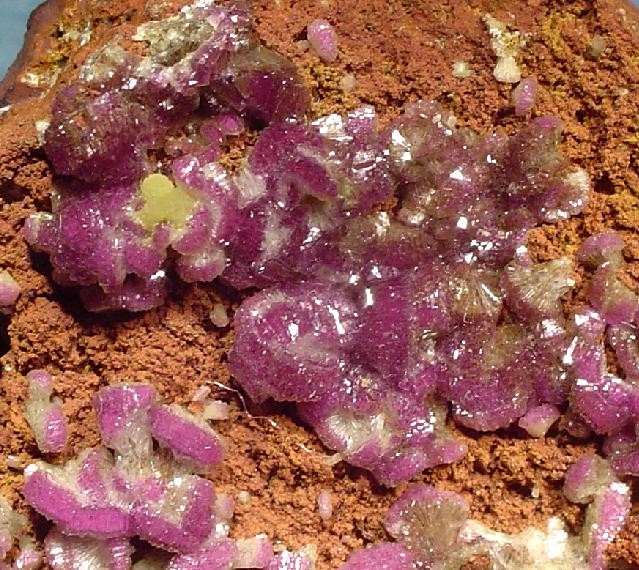
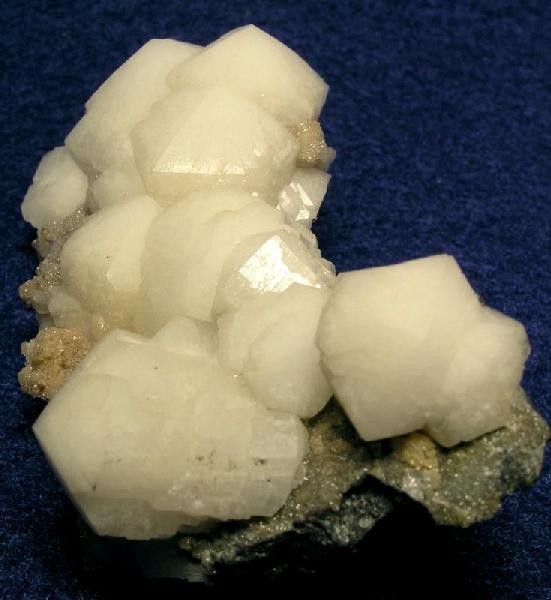
Smithsonite is a zinc carbonate (ZnCO₃) that forms trigonal crystals with variable coloration ranging from white to blue, green to yellow, often displaying a vitreous luster. It is a common secondary mineral in the oxidized zones of zinc deposits, where it forms through the alteration of primary zinc minerals.
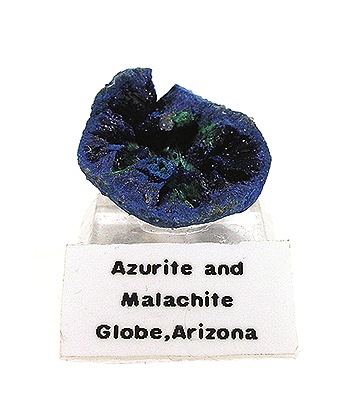
Smithsonite is a zinc carbonate belonging to the calcite group, characterized by a trigonal crystal structure (space group R3̄c). It is named after James Smithson, mineralogist and founder of the Smithsonian Institution. It forms predominantly in supergene environments, that is, in the oxidation zones of zinc sulfide deposits such as sphalerite (ZnS), through secondary alteration processes. Its hardness of 4-4.5 on the Mohs scale and its brittleness make it poorly suited for jewelry, although gem-quality specimens are prized by collectors. Smithsonite frequently associates with other alteration minerals such as calamine (hydrated zinc silicate), hemimorphite, and cerussite. The finest crystals come from deposits in Mexico, Zambia, Morocco, and Arizona, where it sometimes displays intense blue colorations due to trace amounts of copper.
Smithsonite — ZnCO₃, trigonal system, space group R3̄c. Lattice parameters: a = 4.654 Å, c = 15.025 Å. Calculated density: 4.40–4.45 g/cm³. Hardness: 4–4.5 Mohs. Perfect cleavage along 1011. Vitreous to pearly luster. Refractive index: nω ≈ 1.621, nε ≈ 1.849 (birefringence Δn ≈ 0.228). Soluble in dilute acids with effervescence. UV fluorescence: occasionally weakly fluorescent (orange-red under long-wave UV). Composition may contain traces of Fe²⁺, Mn²⁺, Cu²⁺, and Co²⁺, responsible for chromatic variations. Raman spectroscopy: characteristic bands at 1088 cm⁻¹ (CO₃ stretching), 735 cm⁻¹ (bending), 280 cm⁻¹ (Zn-O). X-ray diffractometry: principal reflections at d = 2.81 Å (104), 2.28 Å (110), 1.92 Å (113). Mineral associations: sphalerite, chalcopyrite, cerussite, hemimorphite, goethite, hematite. Genesis: supergene alteration of zinc sulfide deposits in oxidizing environments.
Mining localities
- Zambia — giacimenti di Broken Hill (cristalli azzurri di elevata qualità)
- Messico — zona mineraria di Chihuahua e Sonora (smithsonite verde e blu)
- Marocco — giacimenti dell'Atlante (esemplari di qualità gemmifera)
- Arizona, USA — Morenci, Globe-Miami (cristalli e aggregati botrioidi)
- Australia — New South Wales, Broken Hill (associazioni con altri carbonati)
- Francia — Vallée de la Maurienne, Alpi (cristalli trigonali ben formati)
Frequently Asked Questions
How do you identify smithsonite and what are its main colors?
Smithsonite is a zinc carbonate (ZnCO₃) easily recognized by its trigonal crystals with vitreous luster and a highly variable color range: white, blue, green, yellow, and even pink. Its hardness is low (4-4.5 on the Mohs scale) and it reacts with dilute acids producing effervescence, a characteristic feature of carbonates.
Where is smithsonite found and how does it form?
Smithsonite is a secondary mineral that forms in the oxidation zones of primary zinc deposits through the alteration and oxidation of zinc minerals such as sphalerite. It is commonly found in mineralized deposits in varied climatic environments, where rainwater rich in CO₂ reacts with zinc oxides and carbonates.
What is the economic value of smithsonite and where can you buy specimens?
Smithsonite specimens range in value from €10 to €100 depending on quality, size, and color intensity, with exceptional crystals commanding higher prices. They are available through specialized mineral dealers, international mineral shows, and online platforms for collectors, often sourced from historic deposits in Mexico, Australia, and Europe.
What are the main physical and chemical properties of smithsonite?
Smithsonite has the chemical formula ZnCO₃, trigonal crystal system, density of approximately 4.4-4.5 g/cm³, and hardness between 4 and 4.5 on the Mohs scale. It displays perfect rhombohedral cleavage, vitreous luster, and relatively high specific gravity; it effervesces in dilute hydrochloric acid with the release of CO₂, confirming its nature as a carbonate.
Entry generated with Claude API (Anthropic) on data extracted from Mindat, RRUFF and Wikipedia. Not yet reviewed by a human expert. Verify data against original sources before citing in formal work.