Slate
Ardesia
SiO₂ + Al₂O₃ + mica Properties
- Category
- Rock
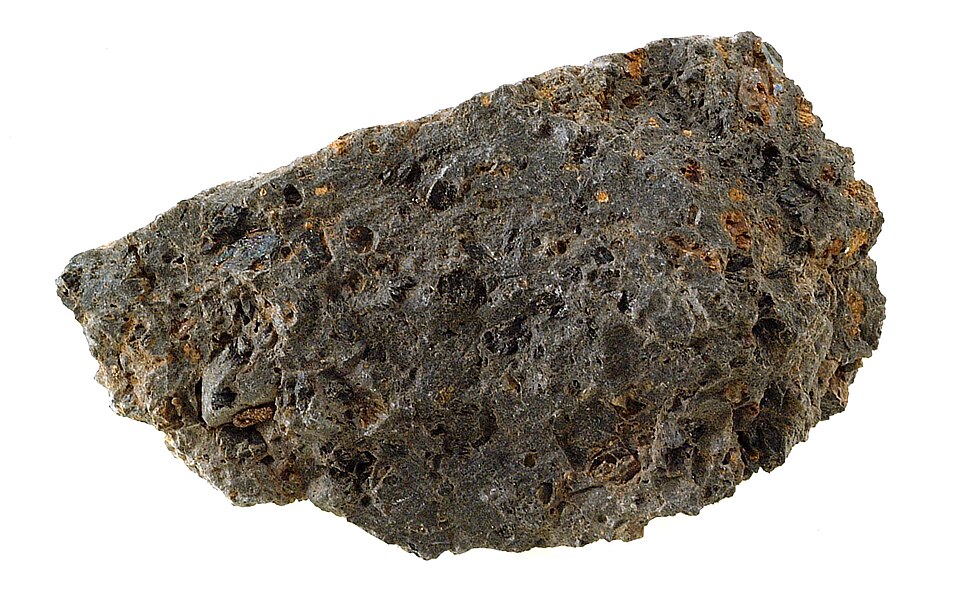
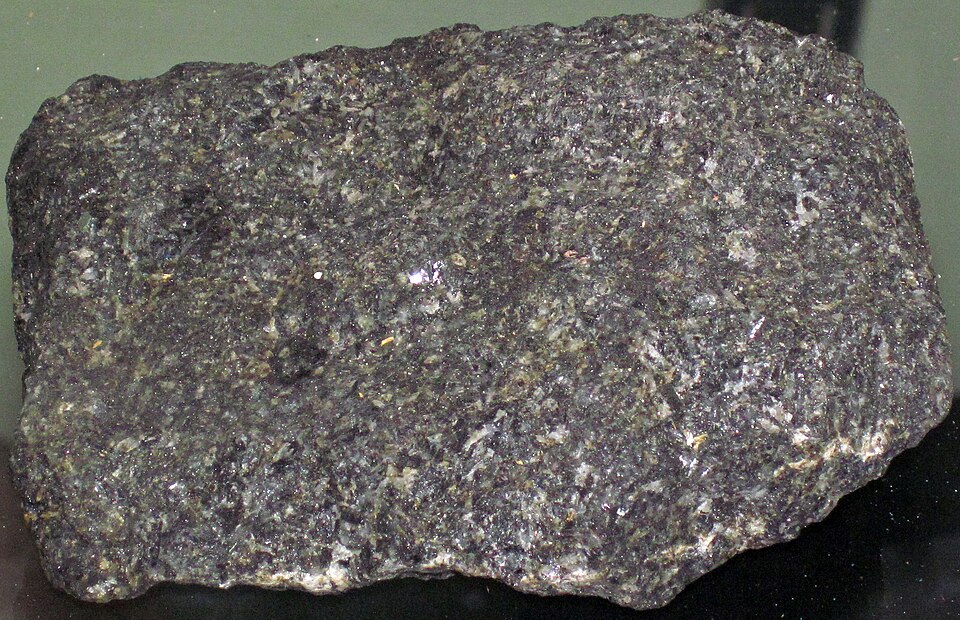
Slate is a fine-grained metamorphic rock rich in phyllosilicates such as mica and chlorite, formed by the transformation of clays and shales under moderate pressure and temperature. Its primary characteristic is perfect cleavage along parallel planes, which allows it to be split into thin, regular slabs used for millennia in roofing, flooring, and slate boards.
Slate is a low-grade metamorphic rock originating from the recrystallization of argillaceous sediments (shale and mudstone) subjected to pressures and temperatures between 200 and 300 °C. During metamorphism, the original clay minerals transform into very fine aggregates of white mica (muscovite), black mica (biotite), chlorite, and recrystallized quartz. This recrystallization imparts the characteristic foliation to the rock—the preferential orientation of crystals along parallel planes—responsible for the perfect cleavage that makes it so valuable from an applied standpoint.
The chemical composition varies slightly depending on sedimentary origin but is dominated by SiO₂ (quartz) and Al₂O₃ (in silicates), with variable quantities of K₂O and MgO bound to phyllosilicates. The most common colors are dark gray, black, and blue-gray, due to the presence of residual organic matter and iron-magnesium minerals such as biotite and chlorite. Slate has been extracted and worked since Roman times, with historic production centers in Wales, Spain (Galicia), Italy (Liguria and Tuscany), and France. Today it remains a highly sought material for prestigious roofing, thanks to its durability, natural impermeability, and aesthetic beauty.
Slate belongs to the group of low-grade metamorphic rocks (anchizone), with regional metamorphism associated with collisional orogens. Crystal system: monoclinic (for primary mineral components such as muscovite, space group C2/c). Hardness: 3–4 on the Mohs scale, with variability due to local mineralogical composition and degree of surface alteration. Density: 2.7–2.8 g/cm³. Refractive index: nα ≈ 1.55–1.58, nγ ≈ 1.60–1.65 (moderate birefringence). Perfect cleavage develops along the metamorphic foliation plane (001), parallel to the preferential orientation of phyllosilicates.
Typical mineralogical composition: muscovite (30–50%), quartz (30–40%), chlorite (10–20%), biotite (5–15%), feldspar (trace–5%), with accessory minerals such as pyrite, graphite, rutile, and carbonates. Raman spectroscopy shows characteristic mica bands around 260–280 cm⁻¹ (Si-O stretching) and 700–800 cm⁻¹ (Si-O bending). X-ray diffraction (XRD) analysis confirms the monoclinic structure of phyllosilicates and quartz recrystallization. Porosity is very low (< 1%), conferring natural impermeability. Color: dark gray, black, blue-gray, occasionally reddish-violet due to hematite presence. Slate is not a gemstone but a lapidary material of gemological-decorative interest for carvings and objects.
Mining localities
- Penrhyn, Gwynedd, Galles, Regno Unito
- Galizia, Spagna
- Liguria e Toscana, Italia
- Bretagna e Angiò, Francia
- Slate Valley, Vermont, Stati Uniti
- Contea di Tipperary, Irlanda
- Valais, Svizzera
Frequently Asked Questions
What is the difference between slate and schist?
Slate and schist are both metamorphic rocks, but slate has finer grain size and perfect cleavage planes, while schist is coarser with visible mineral crystals. Slate forms from clay and shale under moderate pressure and temperature, creating aligned phyllosilicates (mica and chlorite) that allow clean splitting into thin sheets. This makes slate ideal for roofing and flooring, whereas schist is less suitable for such applications.
How is slate formed and where is it found?
Slate forms when clay and shale rocks are subjected to moderate pressure and temperature (200-300°C) during metamorphism, causing phyllosilicates to align into perfect parallel cleavage planes. Major slate deposits are located in Wales, Spain, Brazil, China, and northern Italy, where original sedimentary rocks experienced tectonic pressures from continental collision or subduction zones.
How do you identify slate and what are its main properties?
Slate is identified by its perfect cleavage (splits easily into thin, regular sheets), dark gray to black color, very fine grain size, and lustrous appearance when freshly split. Its main properties include density of 2.7-2.8 g/cm³, hardness of 3-4 on the Mohs scale, impermeability, and excellent weather resistance, making it ideal for roofing, flooring, and outdoor applications.
What is the price of slate and what are its main uses?
Natural slate costs between 15 to 50 euros per square meter for roofing tiles, with premium grades reaching up to 100 euros/m². Main applications include roof coverings, interior and exterior flooring, wall cladding, school chalkboards, and countertops, leveraging its durability, natural aesthetic, and perfect cleavage that allows splitting into thin sheets.
Entry generated with Claude API (Anthropic) on data extracted from Mindat, RRUFF and Wikipedia. Not yet reviewed by a human expert. Verify data against original sources before citing in formal work.