Sikhote-Alin
Sikhote-Alin
Fe-Ni Properties
- Category
- Meteorite
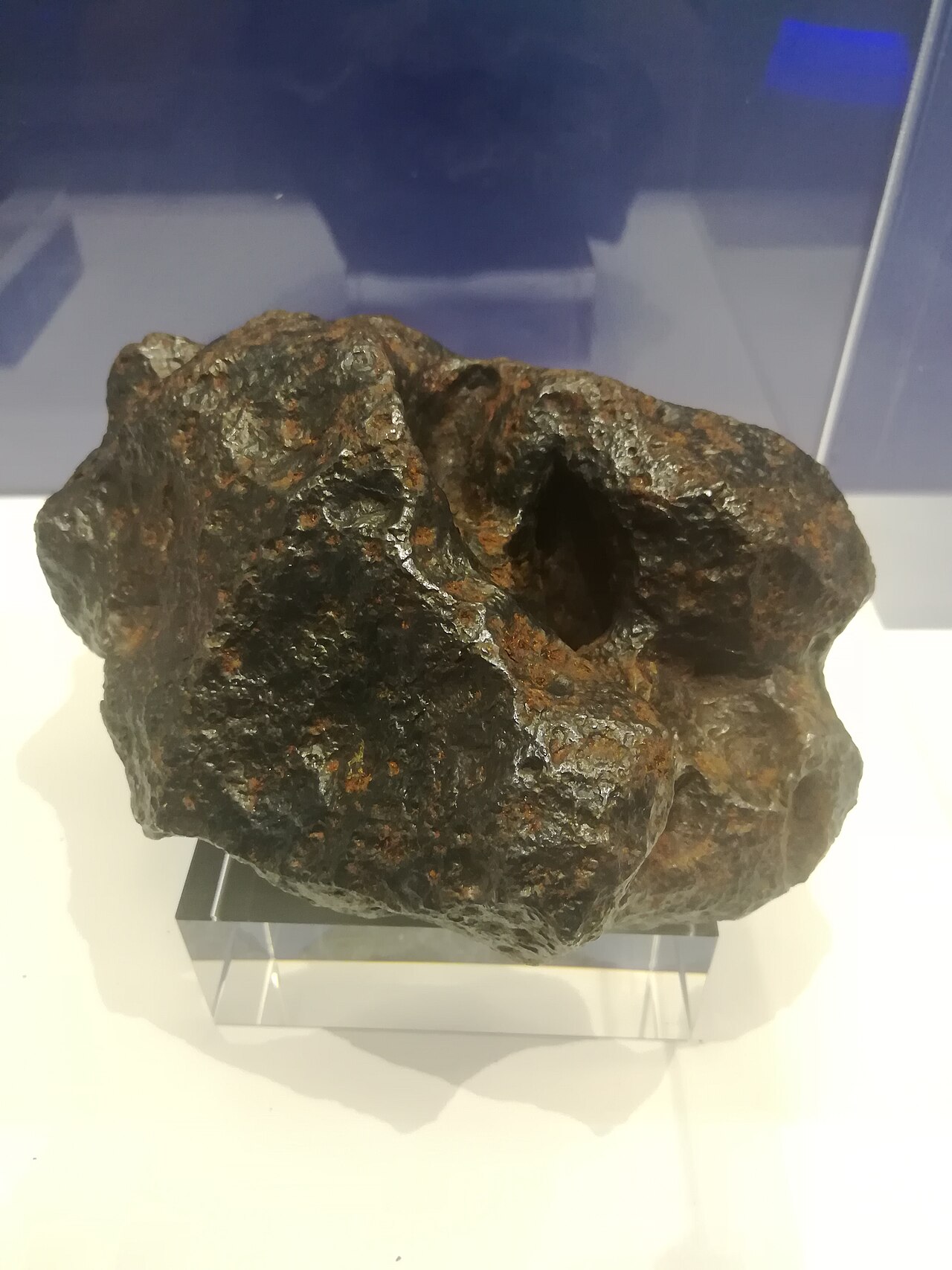
Sikhote-Alin is an iron meteorite that fell in 1947 in the mountainous region of the Russian Far East, composed primarily of a natural alloy of iron and nickel that forms characteristic geometric patterns when polished and etched. Its cubic crystal structure and metallic composition make it one of the most fascinating meteorites for collectors and researchers.
The Sikhote-Alin meteorite represents one of the most significant fall events of the twentieth century. On February 12, 1947, a celestial body of approximately 100 tons penetrated Earth's atmosphere and fragmented into thousands of pieces, creating a strewn field exceeding 2 km² across the Sikhote-Alin mountain range in the Russian Far East. The composition is typical of iron meteorites (siderites), with a natural alloy of iron and nickel that reflects the structure of the planetary core from which it originated.
The cubic crystal structure of Sikhote-Alin generates the celebrated Widmanstätten figures when the meteorite is polished and subjected to acid etching: these geometric patterns of diamond shapes and parallel lines result from the slow cooling of the Fe-Ni alloy in space, with the formation of kamacite crystals (Fe-Ni with low nickel content) and taenite (Fe-Ni with high nickel content). The hardness of 4-5 on the Mohs scale is typical of iron meteorites and reflects the pure metallic composition. From a collector's perspective, Sikhote-Alin remains one of the most sought-after meteorites in the world, with specimens ranging from fragments of a few grams to masses of tens of kilograms.
Classification: Octahedrite iron meteorite (group IIIAB according to Wasson classification). Chemical composition: Fe (87–90%), Ni (8–10%), Co (0.5–0.8%), traces of P, S, C. Crystal system: cubic (space group Im-3m). Structure: kamacite (cubic, a ≈ 2.87 Å) and taenite (cubic, a ≈ 3.58 Å). Hardness: 4–5 Mohs. Density: 7.8–7.9 g/cm³. Widmanstätten figure: mean width of kamacite bands 1–2 mm (estimated cooling rate: 5–10 °C/million years). Radiometric age (Ar-Ar): 4.53 ± 0.05 Ga (age of the Solar System). Nickel content in kamacite: 5.5–6.5% (EPMA analysis). Mössbauer spectroscopy: Fe²⁺/Fe³⁺ ratio consistent with a reduced environment. Traces of troilite (FeS) and schreibersite (Fe,Ni)₃P as minor phases. Magnetic properties: ferromagnetic, saturation magnetization ~220 A·m²/kg.
Mining localities
- Sikhote-Alin, Primorskij Kraj, Estremo Oriente russo, Russia
- Campo di dispersione: Regione montuosa tra 45°N–46°N, 134°E–135°E
Frequently Asked Questions
How much does an authentic Sikhote-Alin meteorite cost?
The price of an authentic Sikhote-Alin meteorite typically ranges from €50 to €500 per gram, depending on size, quality of fusion crust, and presence of characteristic Widmanstätten patterns. Smaller fragments (1-5 grams) are more accessible to collectors, while rare specimens with intact fusion crust command premium prices. Certificates of authenticity from specialized auction houses ensure the investment's legitimacy.
How can you identify a genuine Sikhote-Alin meteorite from a fake?
An authentic Sikhote-Alin displays a black or brown fusion crust from atmospheric re-entry in 1947, extremely high density (approximately 7.8 g/cm³), and pronounced magnetism due to its Fe-Ni composition. When polished and acid-etched, it reveals characteristic parallel band patterns (Widmanstätten figures) that form only in iron meteorites cooled extremely slowly in space. Counterfeits lack these geometric patterns and authentic fusion crust.
What are the scientific properties of the Sikhote-Alin meteorite?
Sikhote-Alin is a siderite (iron meteorite) composed of a natural alloy of iron (Fe) and nickel (Ni) with percentages of 88-92% and 7-10% respectively, belonging to the octahedrite group. Its body-centered cubic crystal structure creates the famous Widmanstätten patterns when exposed to acid, formed by alternating bands of kamacite (low-nickel Fe-Ni) and taenite (high-nickel Fe-Ni). The meteorite dates back approximately 4.5 billion years and originates from the nucleus of a celestial body fragmented in space.
Where can you find and buy a Sikhote-Alin fragment?
Sikhote-Alin fragments are purchased from certified meteorite dealers, specialized auction platforms (such as Bonhams and Christie's for rare pieces), and reputable online mineralogy shops that provide certificates of authenticity. Most circulating fragments come from the original 1947 fall in Russia's Primorsky Krai region, with limited availability. Always verify provenance and request official documentation before purchase.
Entry generated with Claude API (Anthropic) on data extracted from Mindat, RRUFF and Wikipedia. Not yet reviewed by a human expert. Verify data against original sources before citing in formal work.