Petalite
Petalite
LiAlSi₄O₁₀ Properties
- Color
- Colorless, white, gray, pale pink
- Luster
- Vitreous
- Density
- 2.39–2.46 g/cm³
- Category
- Mineral
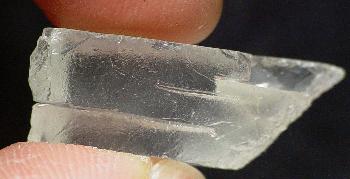
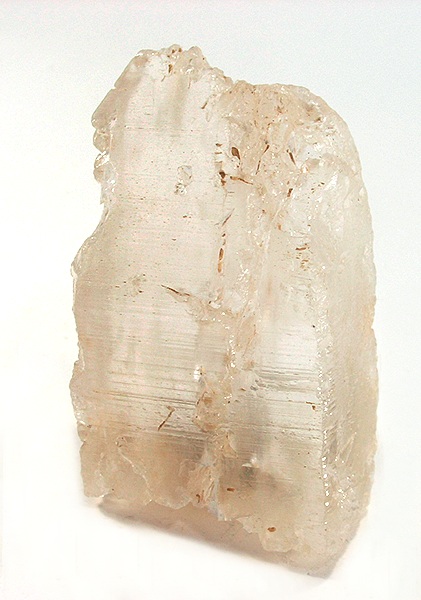
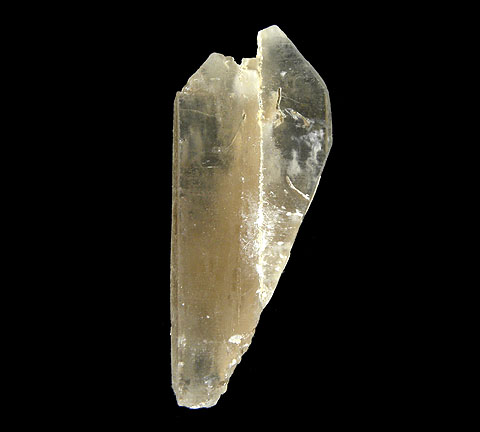
Petalite is a lithium tectosilicate — LiAlSi₄O₁₀ — with a unique place in the history of science: it is the mineral in which lithium was discovered as an element in 1817. Its name comes from the Greek petalon (leaf), for the perfect cleavage that produces thin lamellar fragments.
In 1800, Brazilian mineralogist José Bonifácio de Andrada e Silva first described this mineral from the island of Utö, Sweden. In 1817, Swedish chemist Johan August Arfwedson, analyzing petalite samples, identified an unknown alkaline component he called "lithina" — from the Greek lithos, stone. The element was isolated by Humphry Davy the same year.
Petalite forms in lithium-rich granitic pegmatites, often associated with spodumene, lepidolite, and elbaite. Compared to spodumene, it tends to crystallize under later hydrothermal conditions and at lower temperatures.
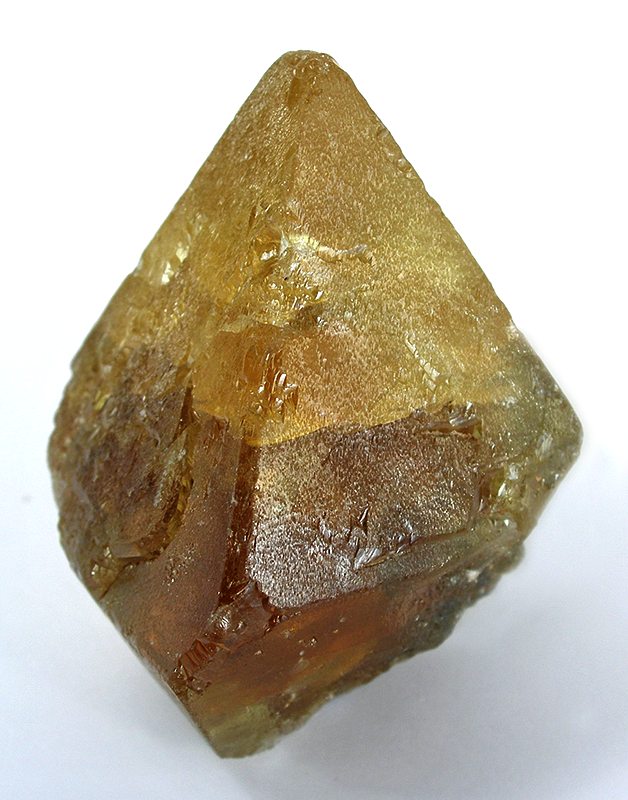
Transparent colorless petalite — sometimes called "castorite" for Elba Island specimens — is appreciated as a collector gem, though its perfect cleavage makes it fragile to cut.
Formula: LiAlSi₄O₁₀. Monoclinic system, space group P2/a. Tectosilicate with a three-dimensional SiO₄ and AlO₄ tetrahedral framework, with Li in tetrahedral coordination — unusual for such a small cation. Refractive index 1.502–1.520, birefringence 0.013–0.017. Very low density (2.39–2.46 g/cm³) reflecting the low atomic weight of lithium. Perfect cleavage {001}. Pleochroism absent or very weak.
Mining localities
- Utö, Sweden
- Bikita, Zimbabwe
- Island of Elba, Italy
- Karibib, Namibia
- Minas Gerais, Brazil
Frequently Asked Questions
Why is petalite important in the history of chemistry?
Because it is the mineral in which lithium was discovered. In 1817, chemist Johan Arfwedson identified a new alkaline element while analyzing petalite samples — he called it "lithium" from the Greek lithos (stone). It was the first element discovered in a specific mineral in the modern era of chemistry.
What is the difference between petalite and spodumene?
Both are lithium silicates from pegmatites, but structurally different: spodumene is a chain silicate (pyroxene), petalite is a framework silicate with a three-dimensional structure. Petalite has much lower density (2.4 vs. 3.1 g/cm³) and forms at lower temperatures in pegmatites.
Entry generated with Claude API (Anthropic) on data extracted from Mindat, RRUFF and Wikipedia. Not yet reviewed by a human expert. Verify data against original sources before citing in formal work.