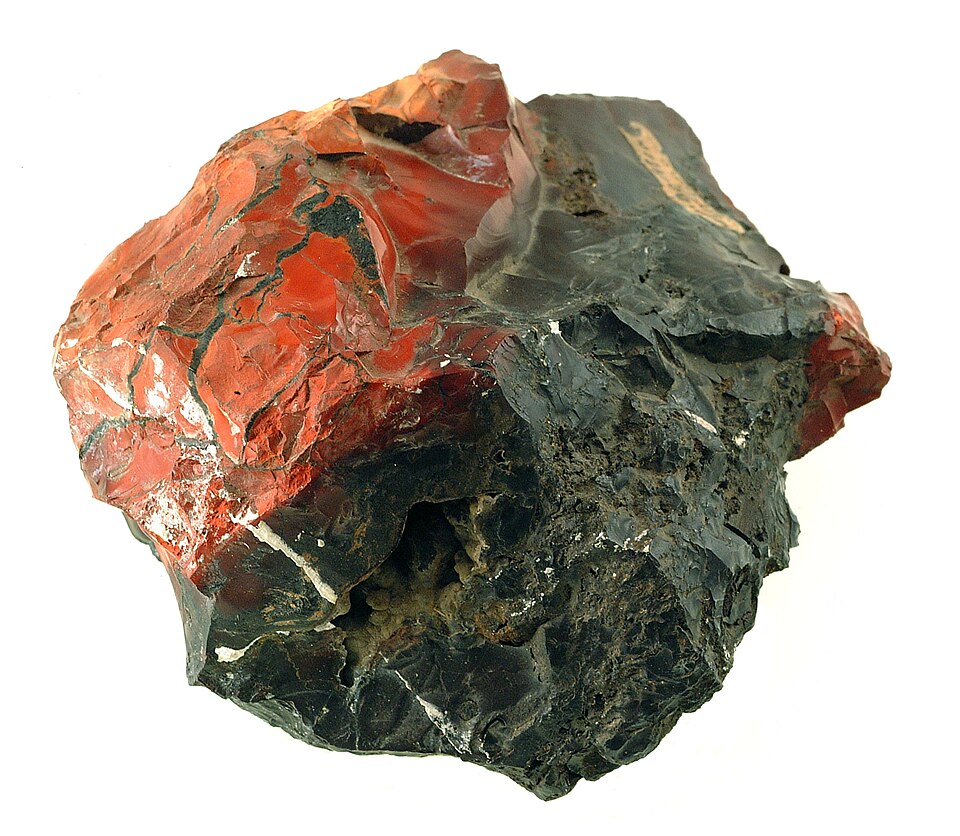
Jasper
Diaspro
SiO₂ Properties
- Category
- Gem
Jasper is a microcrystalline variety of quartz (SiO₂) characterized by an extraordinary range of colors and patterns, making it one of the most appreciated and accessible ornamental gemstones in the world. Its hardness of 6.5-7 on the Mohs scale makes it ideal for jewelry and decorative objects.
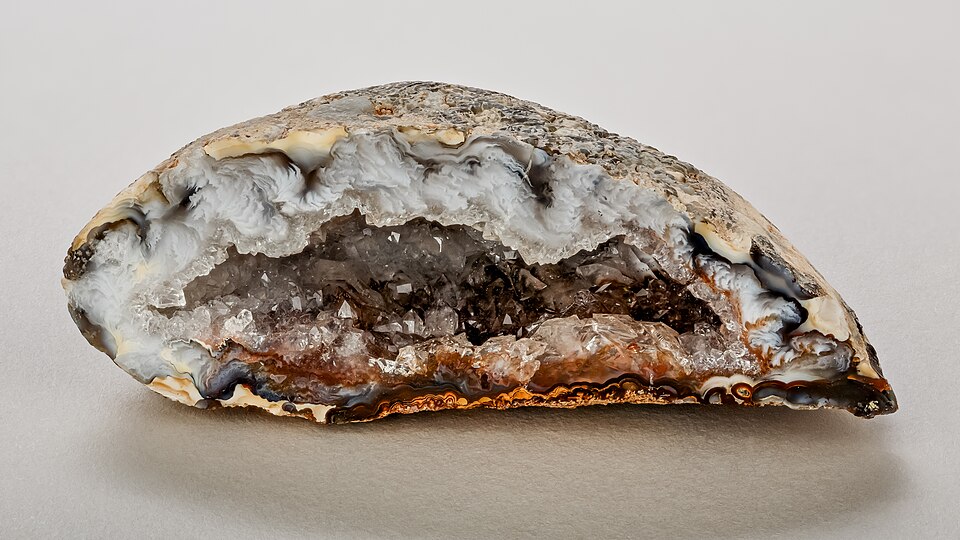
Jasper is a microcrystalline variety of quartz that forms in sedimentary and hydrothermal environments, often associated with iron deposits and colloidal silica. Unlike rock crystal, its crystals are so minute that they are not visible under ordinary optical microscopy, giving it an opaque and compact appearance. Coloration varies enormously based on trace elements: iron imparts red and brown tones (red jasper, brown jasper), manganese produces yellow and orange hues, while iron oxide inclusions create characteristic striped or banded patterns. Notable varieties include Jungle Jasper with green and black motifs, Fire Jasper with orange-red tones, and Orbicular Jasper with concentric circular structures. Used for millennia in sculpture and jewelry, jasper was particularly prized in Egyptian and Mesopotamian art. Today, major gemological markets evaluate jasper based on color vibrancy, structural compactness, and the uniqueness of natural patterns.
Jasper belongs to the trigonal crystal system (like all quartz), but its microcrystalline structure renders it practically isotropic under gemological observation. Refractive index: nω = 1.544–1.553, nε = 1.553–1.554 (negative birefringence, Δ ≈ 0.009). Relative density: 2.58–2.91 g/cm³, variable depending on inclusion content and porosity. Mohs hardness: 6.5–7, with toughness ranging from good to excellent due to its compact structure. UV spectroscopy: many varieties show weak or absent fluorescence, although some red jaspers exhibit weak red fluorescence under long-wave UV (366 nm). Elemental analysis (XRF/EDS): dominant SiO₂ (>95%), with traces of Fe₂O₃ (reds), MnO (yellows), Al₂O₃, and occasional limonite and goethite inclusions. Formation occurs through colloidal silica precipitation in sedimentary environments (sedimentary jasper) or recrystallization in hydrothermal zones (hydrothermal jasper). The most prized varieties on the international gemological market come from Madagascar, Brazil, India, Mexico, and Indonesia; Madagascar Jungle Jasper and Mexican Fire Jasper command prices of 15–40 USD/carat for superior quality specimens.
Mining localities
- Madagascar — Diaspro della Giungla e diaspro rosso di qualità superiore
- Brasile — Diaspro rosso e varietà multicolori da Minas Gerais e Bahia
- Messico — Diaspro del Fuoco da Chihuahua e Durango
- India — Diaspro rosso e giallo da Rajasthan e Gujarat
- Indonesia — Diaspro orbicolare e motivi naturali complessi
- Stati Uniti — Diaspro rosso della California, diaspro blu dell'Oregon
- Australia — Diaspro Mookaite da Western Australia
Frequently Asked Questions
What is the difference between jasper and crystalline quartz?
Jasper is a microcrystalline variety of quartz (SiO₂) where crystals are too small to be seen with the naked eye, while crystalline quartz has well-defined and visible crystals. This microcrystalline structure gives jasper greater compactness, a smooth fracture texture, and greater opacity compared to transparent quartz.
How can you identify real jasper from imitations or synthetic stones?
Authentic jasper has a hardness of 6.5-7 on the Mohs scale, meaning it resists scratching by steel but can be scratched by diamond or topaz. It is also characterized by natural and irregular patterns, often with inclusions of other minerals, while synthetic imitations show patterns that are too perfect and uniform; moreover, real jasper has a density of about 2.6 g/cm³ and is not fluorescent under UV light.
What are the main types of jasper and where are they found?
The main types include red jasper (rich in iron oxides), green jasper, speckled jasper, and striped jasper, which vary in color and patterns. The largest deposits are found in Brazil, India, Madagascar, Australia, and the United States, where jasper forms through silicification of sedimentary and volcanic rocks via diagenetic processes.
How much does jasper cost and what factors determine its price?
The price of jasper is generally very affordable, ranging from 1-5 euros per gram for uncut raw stones, up to 10-50 euros per gram for particularly rare and precious specimens. The price mainly depends on the rarity of the variety, the intensity and uniformity of color, absence of defects, size, and quality of craftsmanship; jasper remains one of the most economical ornamental gemstones on the market.
Entry generated with Claude API (Anthropic) on data extracted from Mindat, RRUFF and Wikipedia. Not yet reviewed by a human expert. Verify data against original sources before citing in formal work.