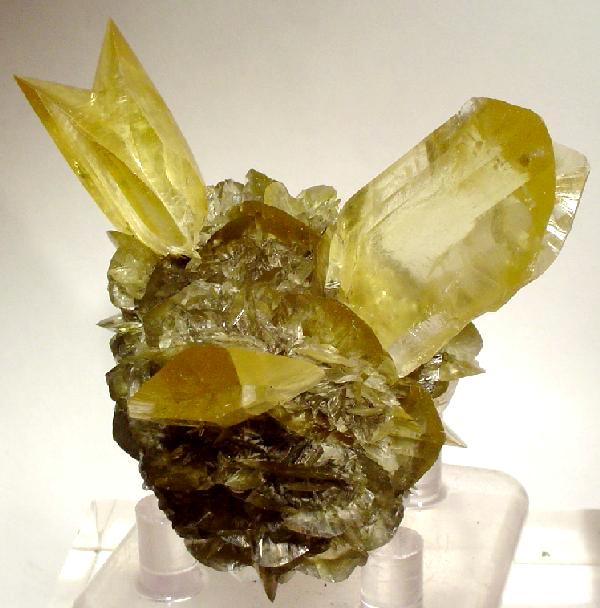
Gypsum
Gesso
CaSO₄·2H₂O Properties
- Category
- Mineral
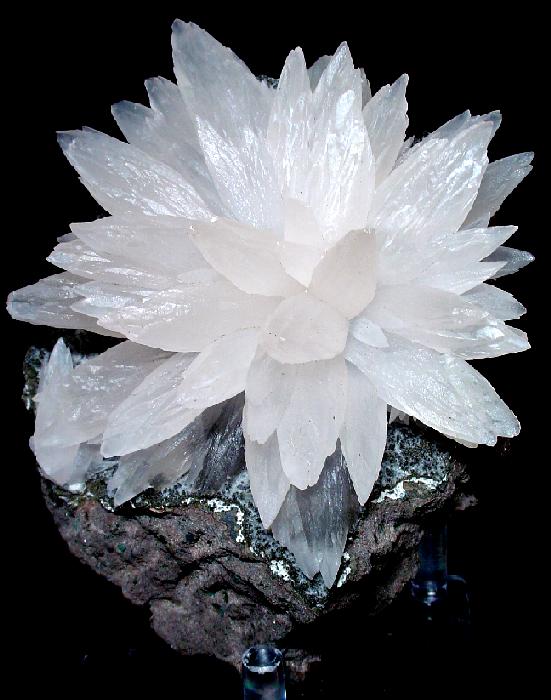
Gypsum is a hydrated calcium sulfate mineral (CaSO₄·2H₂O) extraordinarily widespread in nature, so soft that it can be scratched with a fingernail. You recognize it by its candid appearance, perfect cleavage, and millennia-old use in construction and art: from the Egyptian pyramids to modern drywall.
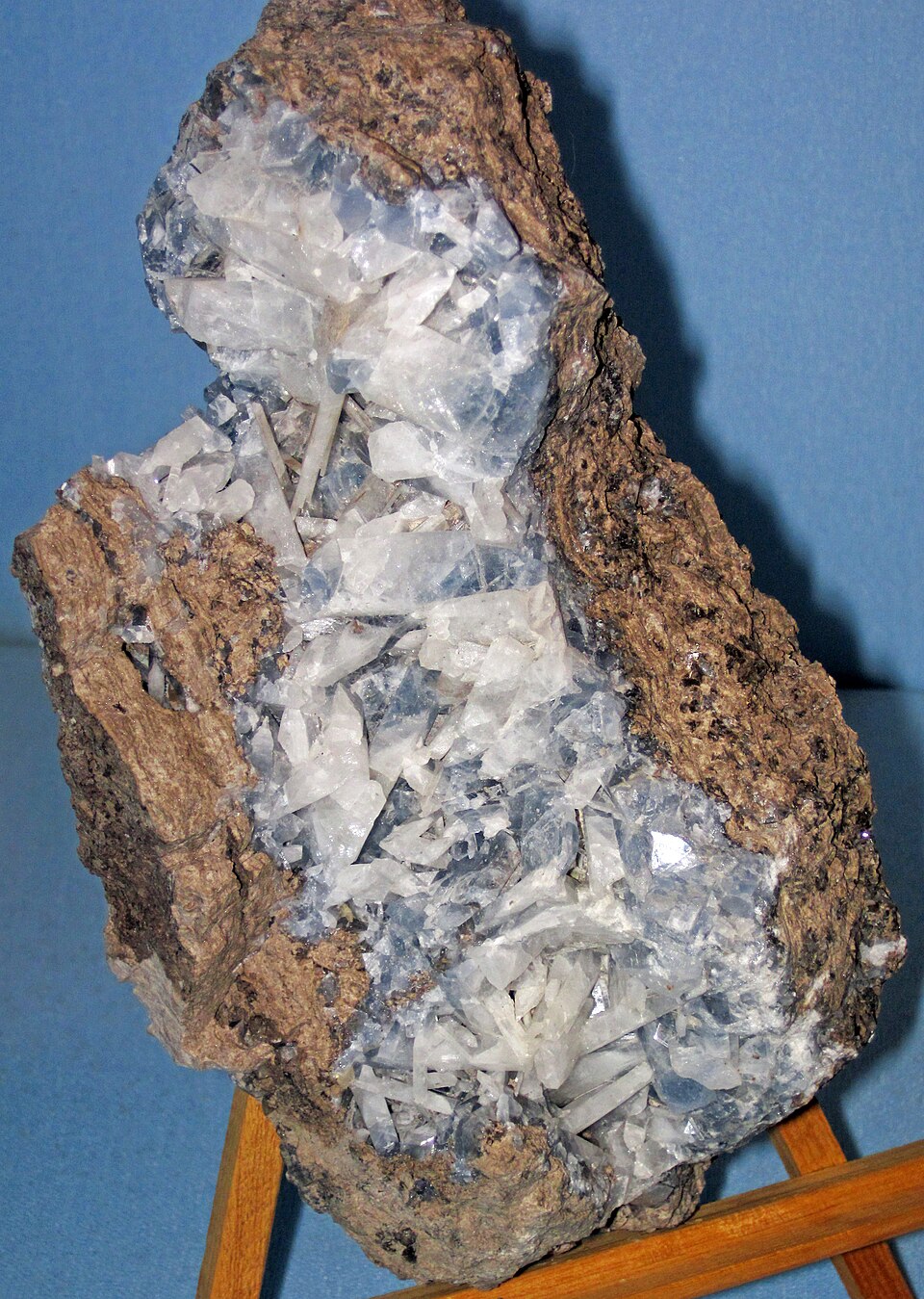
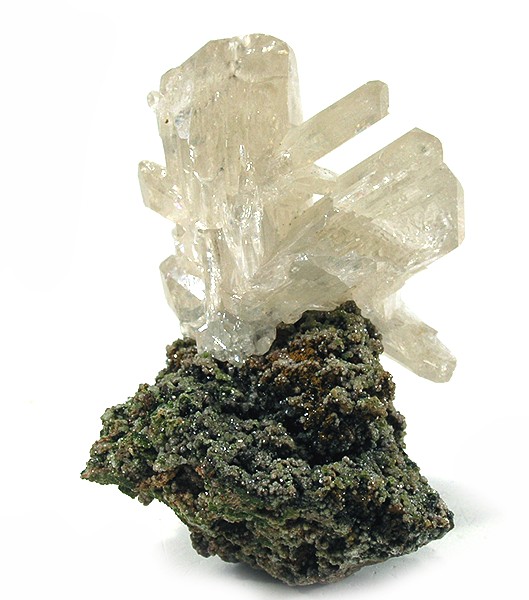
Gypsum is an evaporitic mineral par excellence, formed from the precipitation of marine salt solutions in arid and lagoonal environments. It crystallizes in the monoclinic system with tabular or fibrous habit (selenite variety for transparent and colorless crystals, alabaster for massive and compact form). Its hardness of 2 on the Mohs scale makes it extremely friable, a characteristic that made it prized since antiquity: the Egyptians used it as a binder in monumental constructions, Renaissance artisans for stuccos and decorations, and today it remains fundamental in modern construction as a component of drywall. Perfect cleavage along the (10) plane produces extremely thin, nearly transparent lamellae. It is often associated with halite, sylvite, and other evaporitic minerals in stratified deposits.
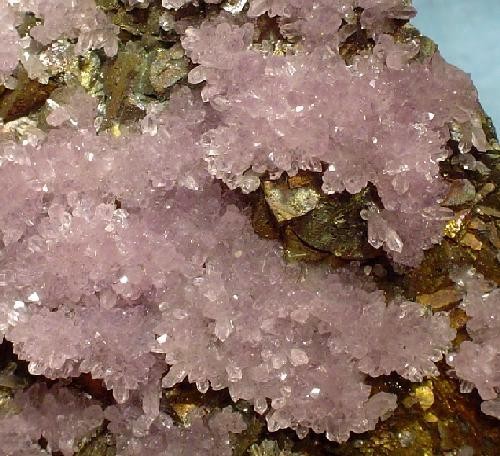
Crystallographic properties: Monoclinic system, space group C2/c, lattice parameters a = 5.68 Å, b = 15.20 Å, c = 6.29 Å, β = 113.8°. Crystal habit variable from tabular (selenite) to fibrous-radiating (alabaster). Perfect cleavage along (10), good along ((100)) and ((101)). Physical properties: Hardness 2 Mohs, density 2.32 g/cm³, vitreous-silky luster, transparent to translucent, colorless or weakly colored (yellow, pink, gray from traces of Fe, Mn, C). Optical properties: Birefringent, refractive indices nα = 1.520, nβ = 1.523, nγ = 1.530; biaxial positive, 2V angle ≈ 58°. No pleochroism. Spectroscopy: Characteristic IR absorption bands at 3406, 3305 cm⁻¹ (O-H stretching), 1685 cm⁻¹ (SO₄²⁻). Raman: peaks at 1008, 1136 cm⁻¹ (SO₄ stretching). Thermal analysis: Progressive water loss with complete dehydration at 190 °C (formation of hemihydrate CaSO₄·½H₂O) and at 250 °C (anhydrite CaSO₄). Mineralogical associations: Halite, sylvite, carnallite, anhydrite, dolomite, calcite in evaporitic successions; sometimes with sulfides (pyrite, galena) in oxidation environments.
Mining localities
- Naica, Chihuahua (Messico) — cristalli giganti di selenite fino a 11 m
- Volterra, Toscana (Italia) — alabastro compatto di qualità artistica
- Fiesso d'Artico, Veneto (Italia) — depositi evaporitici secondari
- Asse, Nord della Francia — giacimenti evaporitici del Triassico
- Saskatchewan (Canada) — depositi evaporitici di grande estensione
- Khewra, Pakistan — miniera di gesso in associazione salina
- Maros, Ungheria — alabastro di pregio gemmologico
Frequently Asked Questions
How do you recognize gypsum mineral and distinguish it from other white minerals?
Gypsum is primarily recognized by its extreme softness: it can be easily scratched with a fingernail (hardness 2 on the Mohs scale) and leaves a white mark on a dark surface. Another distinctive characteristic is its perfect cleavage along parallel planes, producing thin and transparent sheets. Its chemical formula CaSO₄·2H₂O (calcium sulfate dihydrate) differentiates it from similar minerals like calcite or feldspar.
What is the difference between natural gypsum and construction gypsum (plaster)?
Natural gypsum is the pure mineral CaSO₄·2H₂O extracted from quarries, while construction gypsum is obtained by heating the mineral to 160-180°C to partially eliminate crystallization water, transforming it into hemihydrate (CaSO₄·½H₂O). This process makes the product more practical for building applications: when recombined with water, construction gypsum hardens and sets on walls and surfaces, while the natural mineral remains crumbly.
Where does gypsum form in nature and where is it mainly extracted?
Gypsum forms primarily in evaporitic environments, that is in shallow lakes and seas where high evaporation concentrates dissolved salts: when salinity reaches saturation, calcium sulfate precipitates and crystallizes, creating massive deposits. The main ore bodies worldwide are found in Italy (Tuscany, Emilia-Romagna), France, Spain, Germany, and the United States, with Italy being one of Europe's major producers thanks to Miocene geological formations.
What are the main uses of gypsum and which sectors require it?
Gypsum is primarily used in construction for plasters, wall finishes, and drywall, representing approximately 60% of global demand. Significant applications are also found in agriculture (as a soil amendment), food industry (as additive E516), medicine (for orthopedic casts), and artistic-craft sector for sculptures and molds. The versatility of the mineral, combined with the low cost of extraction and processing, makes it one of the most important building materials worldwide.
Entry generated with Claude API (Anthropic) on data extracted from Mindat, RRUFF and Wikipedia. Not yet reviewed by a human expert. Verify data against original sources before citing in formal work.