Fossil Shark Tooth
Dente di Squalo Fossile
Ca₅(PO₄)₃F Properties
- Category
- Fossil
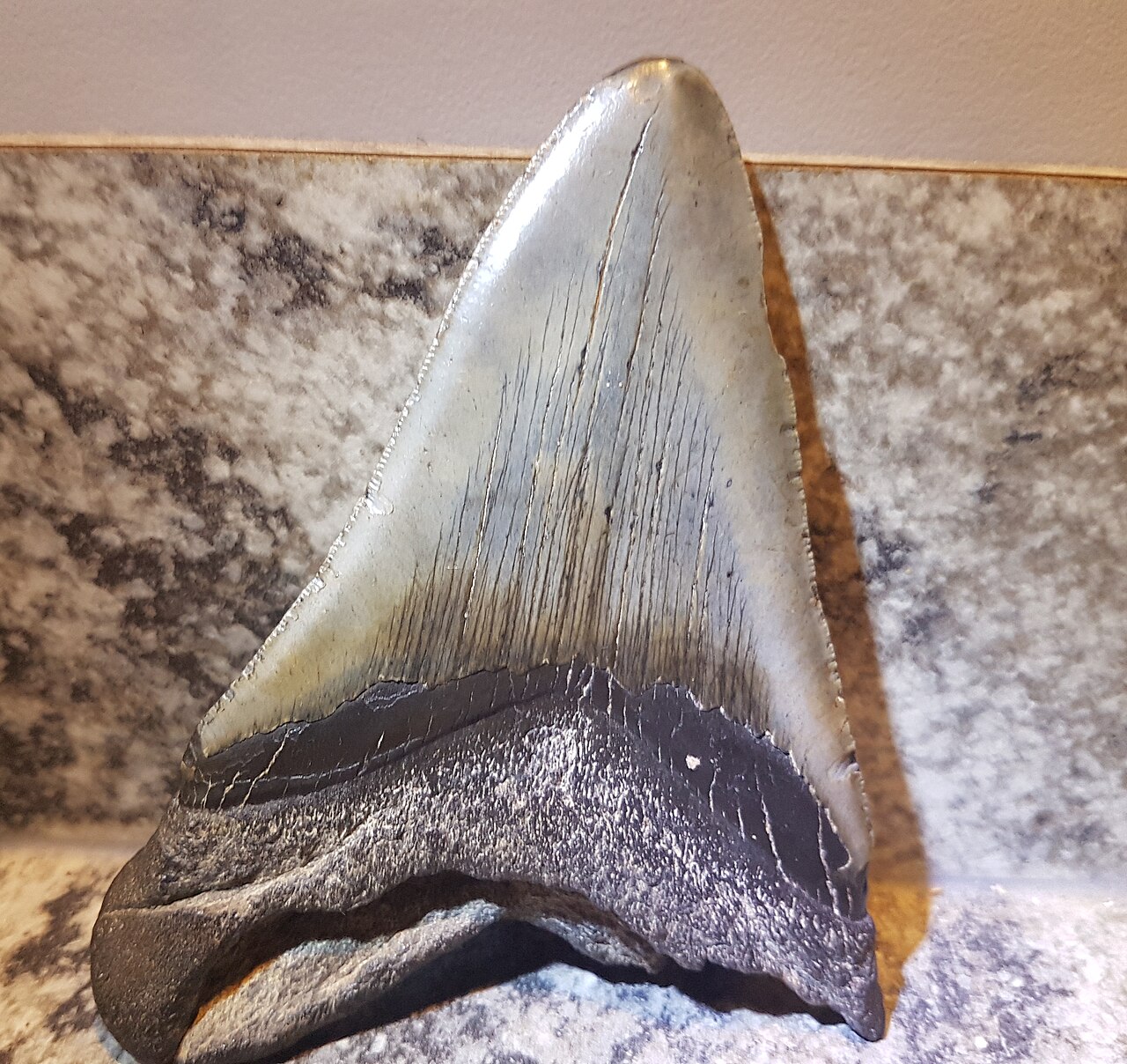
A fossil shark tooth is the mineralized remnant of a tooth belonging to a prehistoric shark, composed primarily of apatite (fluorated calcium phosphate) and preserved in rock for millions of years. Its moderate hardness (4-5 Mohs) and tapered form make it a highly sought-after fossil among collectors and paleontologists.
Fossil shark teeth represent one of the most abundant and fascinating fossils in the paleontological record. Originally composed of dentine and covered with enamel, these teeth progressively mineralized through diagenesis processes, with the original organic matrix being replaced by apatite and other secondary minerals. The final composition varies depending on the burial environment: in phosphate-rich environments, the tooth maintains a well-defined crystalline structure in the hexagonal system, while in other contexts it may undergo alterations due to recrystallization.
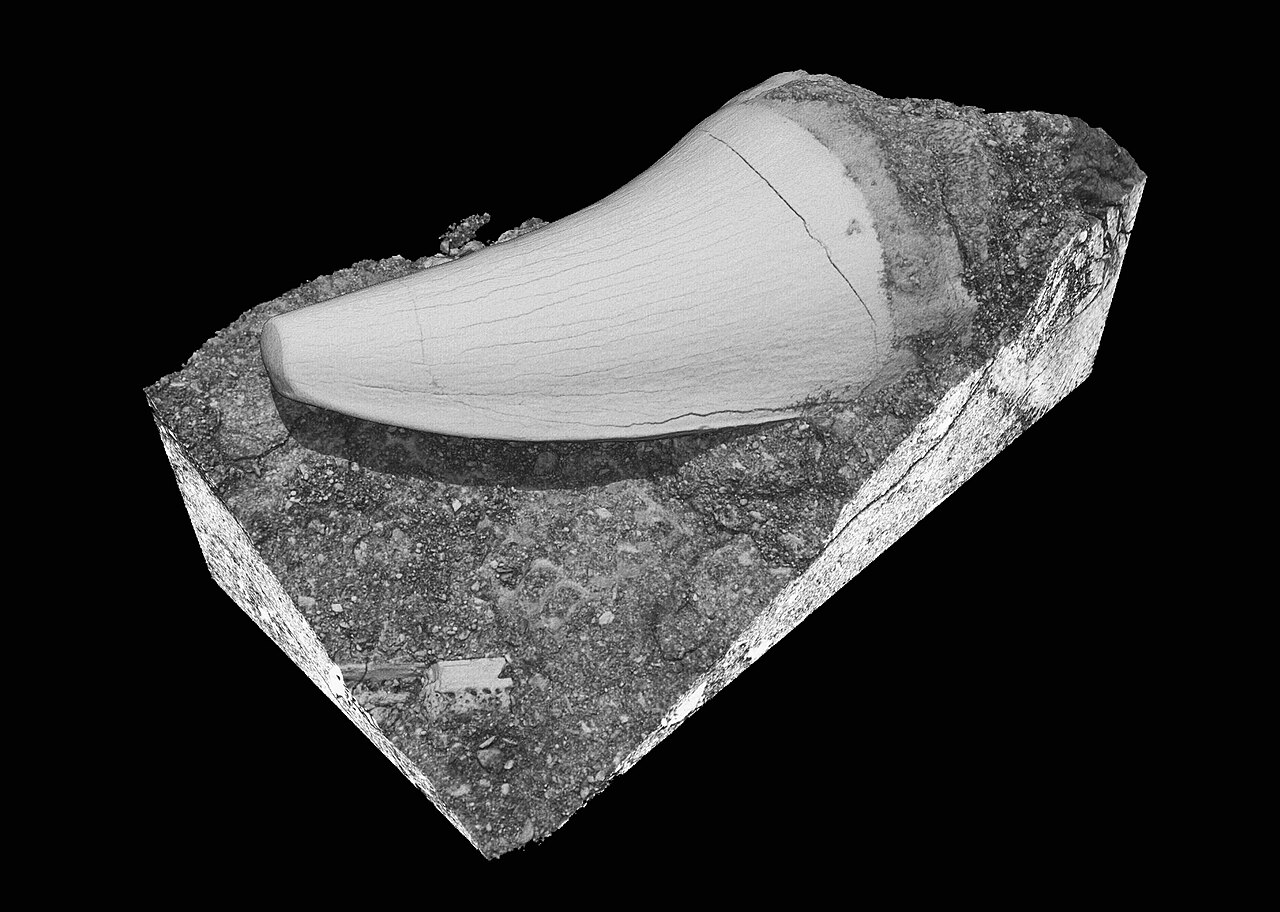
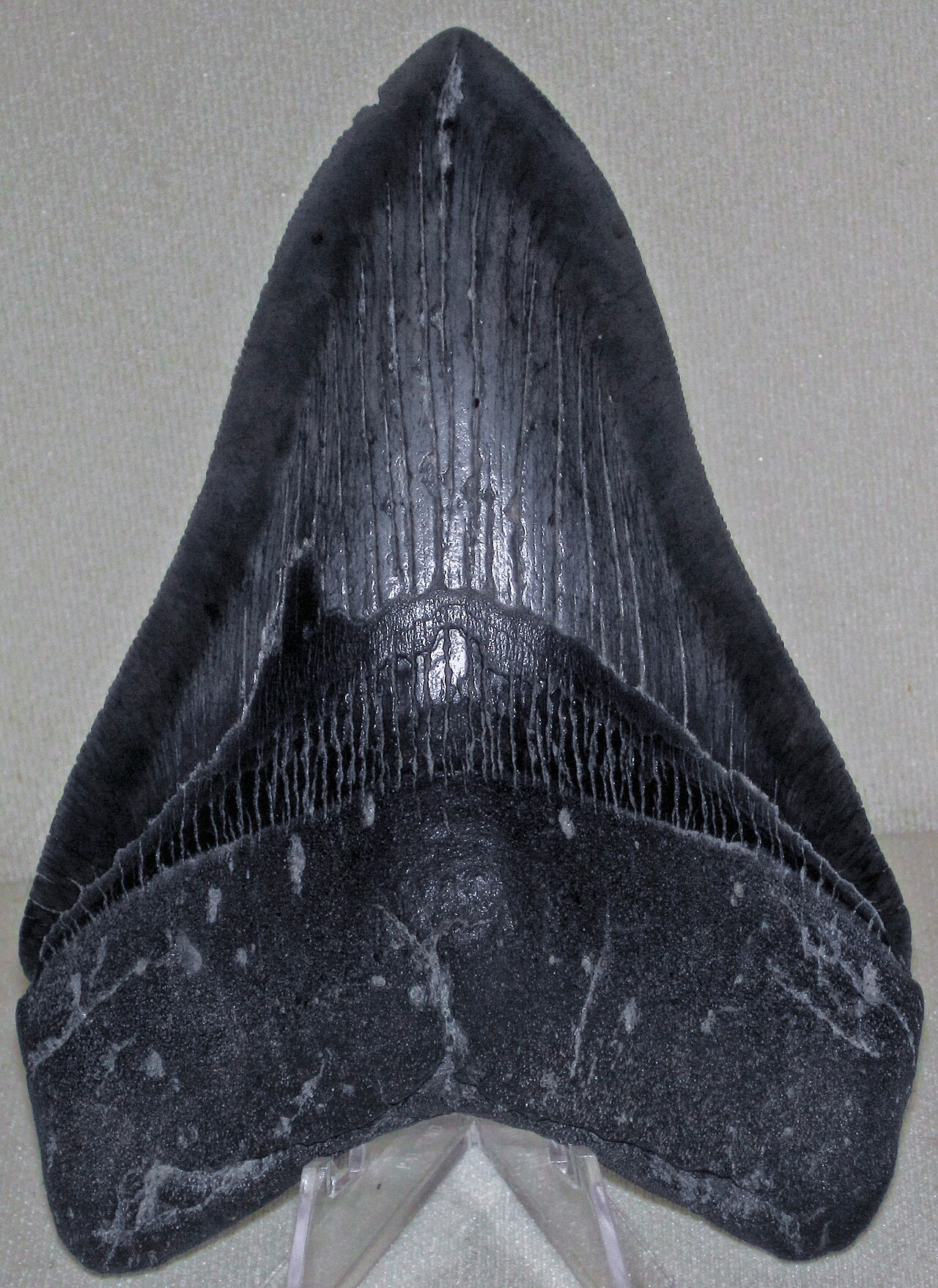
The morphology of the fossil tooth often preserves extraordinary details: the root, cutting edge, lateral facets, and even microscopic growth striations remain visible after millions of years. These fossils come from marine and lagoonal deposits of the Paleozoic, Mesozoic, and Cenozoic eras, and are particularly abundant in Cretaceous and Eocene formations. Color ranges from white to gray, brown to black, depending on iron oxide content and the surrounding rock matrix. The moderate hardness (4-5 on the Mohs scale) results from the crystalline structure of apatite, which is softer than the original biological enamel.
Chemical formula: Ca₅(PO₄)₃F (fluorapatite, member of the apatite series). Crystal system: hexagonal, space group P63/m, typical lattice parameters a = 9.37 Å, c = 6.88 Å. Mohs hardness: 4-5 (lower than original biological enamel, ~5-6). Density: 3.1-3.2 g/cm³. Refractive index: nω ≈ 1.633, nε ≈ 1.629 (uniaxial negative). Luster: vitreous to pearly on fracture surfaces, opaque on altered external surfaces.
Morphology: the fossil tooth preserves the original structure with bulbous root, tapered crown, and sharp or rounded edges depending on shark species. The mineralogical composition is dominated by apatite, with possible secondary phases such as pyrite, limonite, quartz, and diagenetic clays. Surface alteration produces a dark patina rich in iron and manganese oxides. Raman spectroscopy: characteristic phosphate peaks at 960 cm⁻¹ (symmetric P-O stretching) and 1050-1100 cm⁻¹ (asymmetric P-O stretching). UV fluorescence: generally weak, with possible blue-violet luminescence due to rare earth impurities (Ce³⁺, Eu²⁺).
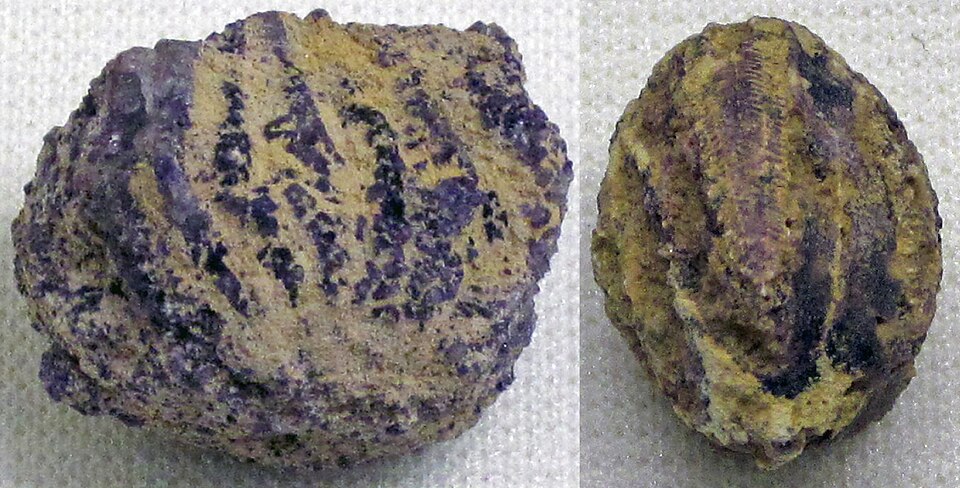
Formation: teeth mineralize during diagenesis in marine and brackish sedimentary environments, with infiltration of phosphate and fluoride-rich solutions. The substitution process can be partial (preserving original histological structures) or complete (full recrystallization). Typical mineralogical associations: vertebrate fossils, shells, belemnites, echinoderms, crinoids.
Mining localities
- Marocco — Fosfatiere di Khouribga, Cretaceo superiore
- Tunisia — Bacino del Gafsa, Paleocene-Eocene
- Egitto — Deserto Occidentale, Eocene
- Stati Uniti — Formazione Bone Valley (Florida), Miocene
- Stati Uniti — Formazione Green River (Wyoming), Eocene
- Belgio — Bacino di Ypres, Eocene
- Francia — Bacino di Parigi, Eocene
- Inghilterra — Gesso di Londra, Eocene
- Germania — Formazione del Mainz, Oligocene
- Italia — Bacino Adriatico, Miocene-Pliocene
- Brasile — Formazione Pirabas, Miocene
- Australia — Bacino di Eucla, Eocene-Oligocene
Frequently Asked Questions
How can I identify a genuine fossil shark tooth from a fake?
A genuine fossil shark tooth displays the smooth, lustrous surface characteristic of apatite (Ca₅(PO₄)₃F), high specific gravity (2.3-2.4 g/cm³), and natural coloration ranging from gray to dark brown due to mineralization. Plastic or resin imitations are much lighter and do not scratch easily with a steel point, while authentic fossils have a Mohs hardness of 4-5 that allows visible micro-scratches.
How much does a fossil shark tooth cost and where can I buy one?
Fossil shark tooth prices vary considerably from €5-15 for small common specimens (1-3 cm) to €50-200+ for rare, well-preserved teeth or those belonging to extinct species like Megalodon. You can purchase authentic fossils from natural history museums, certified mineral fairs, reputable online specialized retailers, and authorized paleontological excavations.
How does a fossil shark tooth form and how old is it?
A fossil shark tooth forms when the original biological tooth is buried in marine sediments that, over time, mineralize the organic matrix through percolation of apatite-rich fluids (Ca₅(PO₄)₃F). Depending on the species and geological origin, these fossils can range in age from 5 million years to over 100 million years in the case of prehistoric sharks like Megalodon (extinct 3.6 million years ago).
What is the chemical composition and hardness of a fossil shark tooth?
The main composition of a fossil shark tooth is apatite, a fluorated calcium phosphate with chemical formula Ca₅(PO₄)₃F, which gives the fossil a moderate hardness of 4-5 on the Mohs scale. This hardness makes it resistant to natural abrasion but friable enough to scratch with a steel blade, a characteristic that helps distinguish it from synthetic imitations.
Entry generated with Claude API (Anthropic) on data extracted from Mindat, RRUFF and Wikipedia. Not yet reviewed by a human expert. Verify data against original sources before citing in formal work.