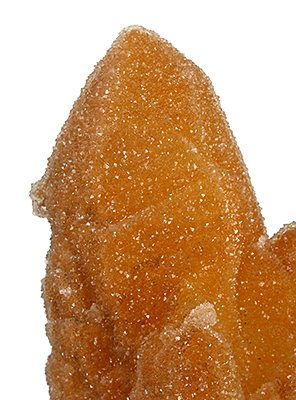
Danburite
Danburite
CaB₂Si₂O₈ Properties
- Category
- Gem
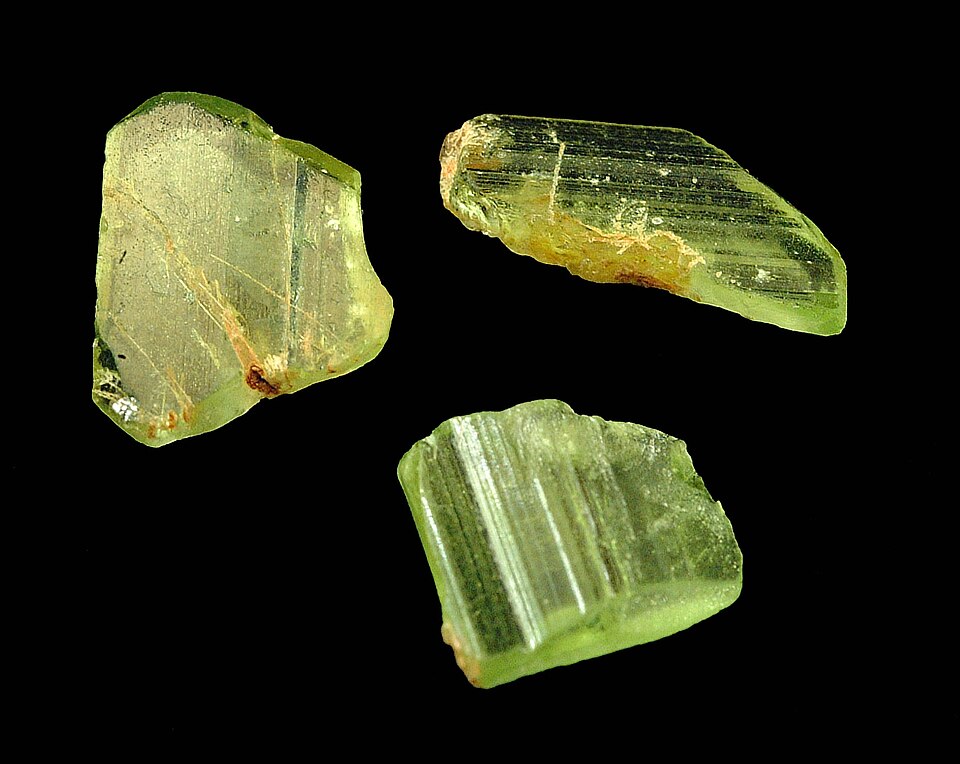
Danburite is a calcium boron silicate that forms transparent crystals ranging from colorless to yellow, prized as gemstones for their brilliance and hardness. It takes its name from Danbury, Connecticut, where it was discovered in 1839.
Danburite (CaB₂Si₂O₈) is an orthorhombic boron silicate that crystallizes in elegant prismatic forms, often resembling topaz. Its hardness of 7-7.5 on the Mohs scale makes it sufficiently durable for jewelry, though it requires care due to its conchoidal fracture brittleness. Color ranges from colorless to straw yellow, pale pink, or light brown, with a refractive index between 1.627 and 1.654 and moderate birefringence (0.009). Danburite forms in granitic pegmatites and boron-rich metamorphic rocks, often in association with tourmaline, quartz, and feldspar. The most prized gem-quality localities include Myanmar (Burma), where intense yellow and transparent crystals are found, followed by Madagascar and Mexico. In the contemporary gemological market, danburite remains a niche gemstone, appreciated by collectors for its rarity and particularly valued in the Japanese market.
Crystal system: orthorhombic, space group Pnma. Lattice parameters: a = 8.76 Å, b = 8.04 Å, c = 5.00 Å. Density: 3.00-3.02 g/cm³. Mohs hardness: 7-7.5. Refractive index: nα = 1.627, nβ = 1.633, nγ = 1.654; birefringence Δ = 0.027. Optical dispersion: moderate (v ≈ 0.016). Pleochroism: weak, with color variation along optical axes. UV spectroscopy: blue-white fluorescence under long-wave UV radiation (365 nm) in some specimens. Chemical composition: CaB₂Si₂O₈ with possible trace amounts of Al, Fe, Mg. Fracture: conchoidal; cleavage absent. Commercial gem-quality danburite primarily originates from granitic pegmatites in Myanmar (Mogok Valley), Madagascar (Antsirabe), and Mexico (San Luis Potosí). Danburite is distinguished from topaz by its lower density, weaker pleochroism, and characteristic UV fluorescence.
Mining localities
- Myanmar (Birmania) — Mogok Valley: cristalli gialli intensi e trasparenti, qualità gemmologica superiore
- Madagascar — Antsirabe e regioni pegmatitiche: cristalli incolori e gialli, produzioni commerciali
- Messico — San Luis Potosí: pegmatiti granitiche con danburite rosa pallido
- Connecticut, USA — Danbury: località storica di prima descrizione, pegmatiti feldspatiche
- Giappone — Kyushu: pegmatiti granitiche con cristalli di qualità
Frequently Asked Questions
What is the hardness of danburite and how do you identify it?
Danburite has a hardness of 7-7.5 on the Mohs scale, making it suitable for jewelry. It is identified by its transparent to yellow crystals, vitreous luster, and characteristic orthorhombic crystal structure.
Where is danburite found and what are the main deposits?
Danburite occurs in metamorphic rocks and pegmatites worldwide, with significant deposits in Connecticut (USA), Myanmar, Japan, and Madagascar. The finest specimens come from Myanmar, known for their transparency and intense yellow color.
What is the chemical composition of danburite and how does it form?
Danburite is a calcium boron silicate with the formula CaB₂Si₂O₈ that forms in high-temperature metamorphic environments in boron-rich rocks. Its formation requires specific conditions where boron is abundant and interacts with calcium and silica.
How much does danburite cost and what is its value as a gemstone?
Danburite prices range from 50 to 500 euros per carat depending on transparency, color, and origin, with Myanmar specimens being the most expensive. It is less valuable than diamonds and rubies but appreciated by collectors for its brilliance and rarity.
Entry generated with Claude API (Anthropic) on data extracted from Mindat, RRUFF and Wikipedia. Not yet reviewed by a human expert. Verify data against original sources before citing in formal work.