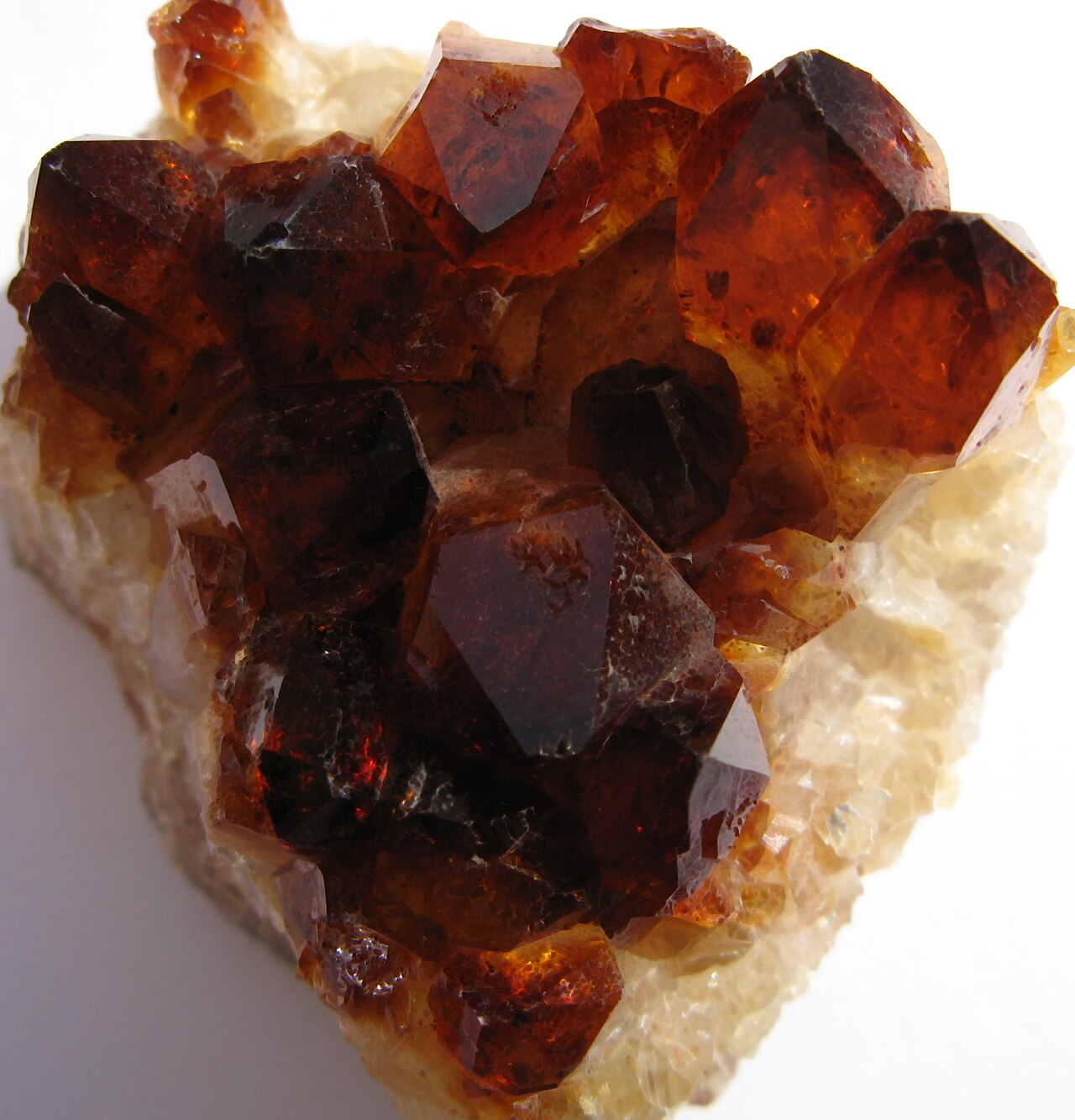
Citrine
Quarzo Citrino
SiO₂ Properties
- Color
- Yellow, yellow-orange, golden
- Luster
- Vitreous
- Density
- 2.65 g/cm³
- Category
- Gem
Citrine is a yellow variety of quartz, its name derived from the French citron (lemon). It is the most popular yellow quartz gemstone worldwide, prized for its solar color ranging from pale yellow to intense orange.
Natural citrine is actually quite rare — the majority of citrine on the market is heat-treated amethyst exposed to 400–500°C, which loses its violet color and assumes yellow-orange hues. The color of natural citrine is caused by aluminum color centers in the crystal lattice.
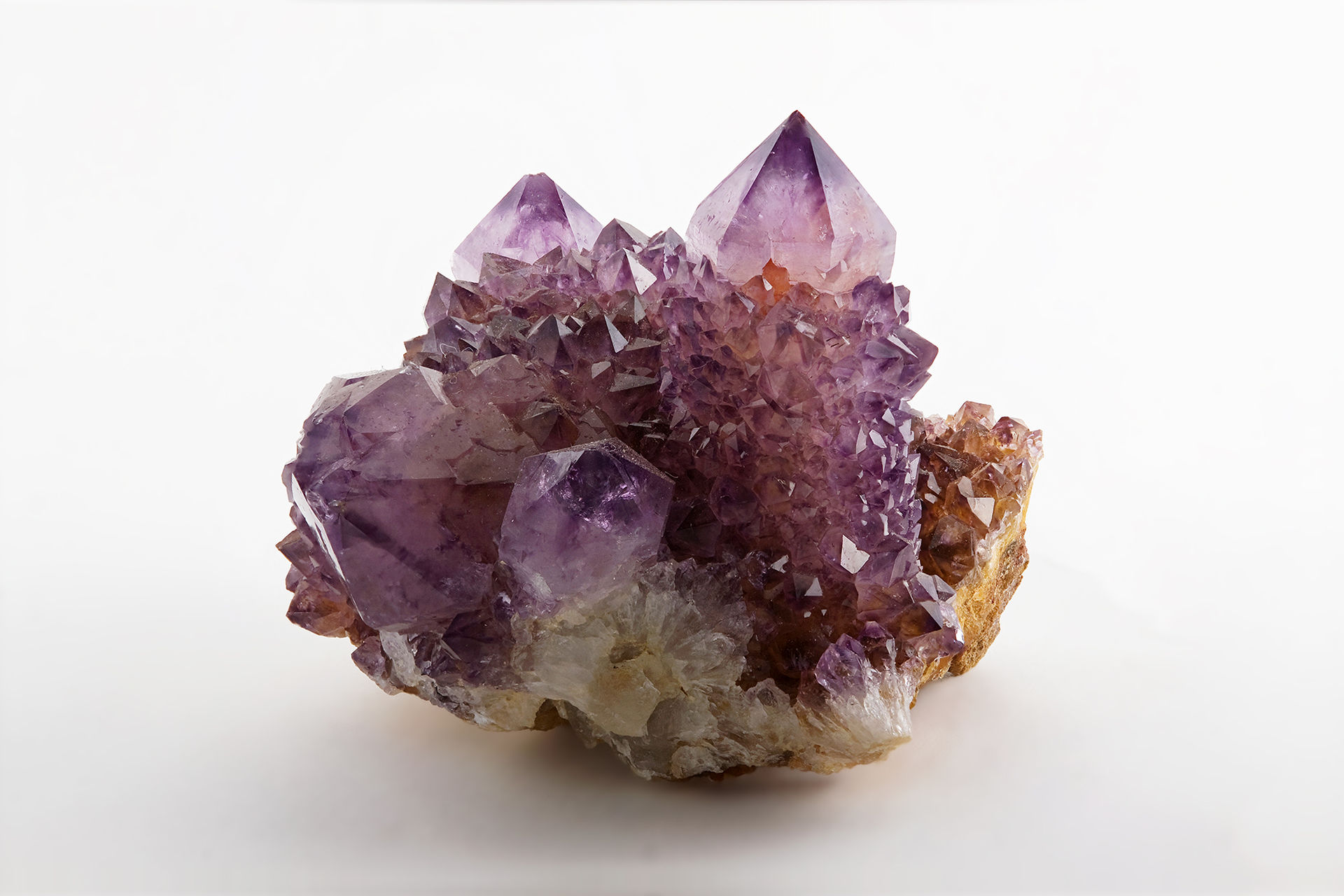
Citrine and amethyst can coexist within the same crystal, forming the rare ametrine, exclusive to the Anahi mine in Bolivia.
Belongs to the quartz group, trigonal crystal system. The refractive index is 1.544–1.553, birefringence 0.009. Natural citrine exhibits weak dichroism under polarized light — a characteristic absent in citrine produced by heat treatment of amethyst. Thermal stability is limited: color fades above 200–300°C.
Mining localities
- Minas Gerais, Brasile (principale produttore)
- Madagascar
- Russia (Hasawarka)
- Uruguay
- Zambia
Frequently Asked Questions
How is citrine quartz formed and what is its chemical composition?
Citrine is a variety of quartz (SiO₂) whose yellow-orange color is due to iron impurities and exposure to natural radiation over geological time. It forms primarily in hydrothermal veins and cavities within igneous and metamorphic rocks, achieving its characteristic coloration through alteration processes that can take millions of years.
How can I identify authentic citrine from treated or synthetic quartz?
Authentic citrine has a hardness of 7 on the Mohs scale, a density of approximately 2.65 g/cm³, and often shows internal parallel striations along crystal axes visible under a microscope. Natural citrines display non-uniform color distribution with lighter and darker zones, while heat-treated specimens (very common in commerce) show extremely uniform coloring and often an unnaturally intense orange tone.
What is the average price of citrine quartz and where is it found in nature?
Good quality natural citrine typically costs between 5 and 30 euros per carat, with higher prices for specimens with intense coloring and high transparency. The main deposits are found in Brazil, Madagascar, Uruguay, and Zambia, while smaller and lower-grade crystals also come from deposits in the USA and Europe.
Is natural citrine rare or is most of it heat-treated?
The vast majority of citrine on the market is heat-treated, as natural amethyst quartz (purple), when exposed to temperatures of 300-400°C, transforms into yellow citrine. Untreated natural citrine is actually quite rare and represents only a small percentage of extracted crystals, making authentic specimens more sought after by collectors and mineralogists.
Entry generated with Claude API (Anthropic) on data extracted from Mindat, RRUFF and Wikipedia. Not yet reviewed by a human expert. Verify data against original sources before citing in formal work.