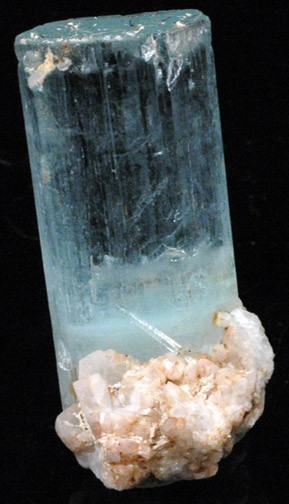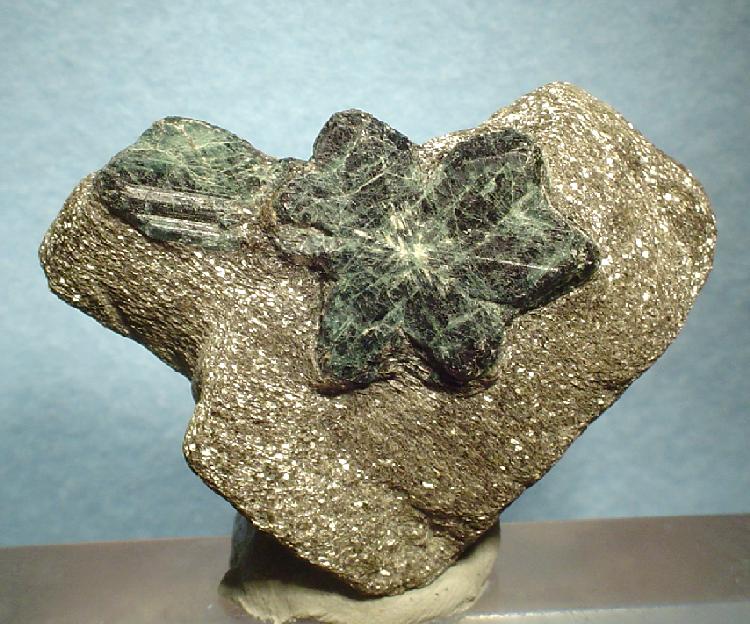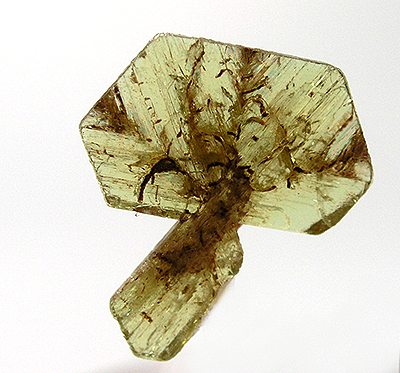
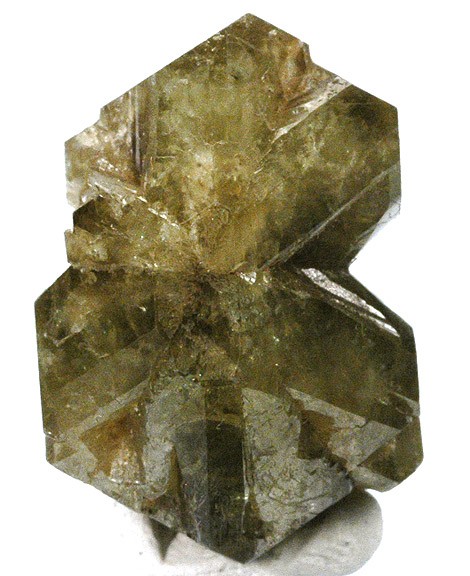
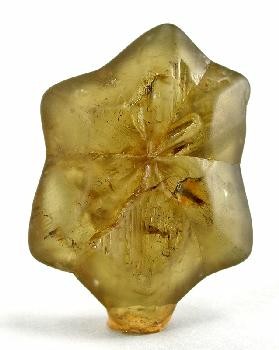
Chrysoberyl
Crisoberillo
BeAl₂O₄ Properties
- Category
- Gem
Chrysoberyl is a beryllium and aluminum oxide (BeAl₂O₄) that forms orthorhombic crystals of extraordinary hardness (8.5 Mohs), second only to diamond and corundum among natural gemstones. Appreciated for millennia for its transparency and brilliance, it is celebrated in the cat's eye (chatoyant) and alexandrite (dichroic) varieties, the latter capable of changing color from green to red depending on the light source.
Chrysoberyl is an oxide mineral that crystallizes in the orthorhombic system with a characteristic prismatic habit. Its chemical formula BeAl₂O₄ places it among the hardest compounds after diamond (10 Mohs) and corundum (9 Mohs), making it ideal for luxury jewelry. The crystal structure allows preferential orientation of microscopic rutile inclusions, responsible for the chatoyant (cat's eye) effect that appears as a sharp luminous band when the gemstone is cut en cabochon.
The rarest and most prized variety is alexandrite, named after Tsar Alexander II of Russia. This variety contains traces of chromium (Cr³⁺) that determine its pronounced pleochroism and dichroism: it appears blue-green in daylight or fluorescent light, and red-purple under incandescent light. The most important deposits are found in Brazil (Bahia, Minas Gerais), Sri Lanka, Madagascar, and Russia (Urals). Colorless or yellow-greenish chrysoberyl is more common and less expensive, while gem-quality alexandrite reaches prices comparable to mid-range rubies.
Crystal system: orthorhombic, space group Pmmm (no. 47). Lattice parameters: a = 9.40 Å, b = 5.48 Å, c = 4.43 Å. Mohs hardness: 8.5; density: 3.73–3.85 g/cm³ (varies with chromium content). Refractive index: nα = 1.746–1.748, nβ = 1.748–1.756, nγ = 1.754–1.762 (birefringent, positive optical sign). Birefringence: δ ≈ 0.009–0.010. Dispersion: 0.011 (moderate). Pronounced pleochroism in alexandrite: blue-green/yellow-green/red. UV-Vis spectroscopy: characteristic absorption lines in the red (approximately 680 nm) and blue (approximately 475 nm) for alexandrite, attributed to d³ transitions of Cr³⁺. Fluorescence: reddish under long-wave UV (365 nm) for some specimens. Fracture: conchoidal; no cleavage, but possible twinning along the 110 plane. Thermal stability: stable up to approximately 1800 °C. Solubility: insoluble in dilute acids at room temperature. Common inclusions: rutile (responsible for chatoyancy), mica, feldspar. Natural alexandrite is distinguished from synthetic imitations (often chromium-doped YAG) by Raman spectroscopy and fluorescence analysis.
Mining localities
- Bahia, Minas Gerais, Brasile
- Colombo, Sri Lanka
- Antananarivo, Madagascar
- Sverdlovsk, Urali, Russia
- Orissa, India
- Khyber Pakhtunkhwa, Pakistan
- Ural Mountains, Russia
Frequently Asked Questions
What is the difference between chrysoberyl and cat's eye?
Cat's eye is a specific variety of chrysoberyl characterized by the optical chatoyant effect, a luminous band that moves across the stone's surface when exposed to light. This phenomenon is caused by parallel fibrous inclusions within the orthorhombic crystal structure of the BeAl₂O₄ mineral. Not all chrysoberyls possess this property: only those with the right concentration and orientation of inclusions display the cat's eye effect.
How much does a gem-quality chrysoberyl cost?
Chrysoberyl prices vary significantly based on quality, transparency, and variety, ranging from 50-200 euros per carat for ordinary stones to 500-2000 euros per carat for high-quality cat's eye specimens. Chrysoberyls with intense yellow-green color and exceptional transparency command the highest prices, especially if verified from historic mining locations such as Sri Lanka or Brazil.
How does chrysoberyl form in nature?
Chrysoberyl (BeAl₂O₄) forms predominantly in beryllium-rich granitic pegmatites and gneisses through magmatic crystallization processes under specific temperature and pressure conditions. Orthorhombic crystals develop when beryllium and aluminum oxide-rich magma cools slowly, allowing atomic ordering that generates the extraordinary hardness of 8.5 on the Mohs scale.
How do you recognize a real chrysoberyl from a counterfeit?
An authentic chrysoberyl is recognized by its exceptional hardness (8.5 Mohs), making it extremely scratch-resistant, and its high density (3.7-3.8 g/cm³), superior to many other transparent minerals. Additionally, chrysoberyl shows specific optical characteristics such as the absence of obvious birefringence and, in cat's eye specimens, a well-defined and stable chatoyant effect when rotated; gemological tests like spectroscopy confirm the BeAl₂O₄ formula.
Entry generated with Claude API (Anthropic) on data extracted from Mindat, RRUFF and Wikipedia. Not yet reviewed by a human expert. Verify data against original sources before citing in formal work.