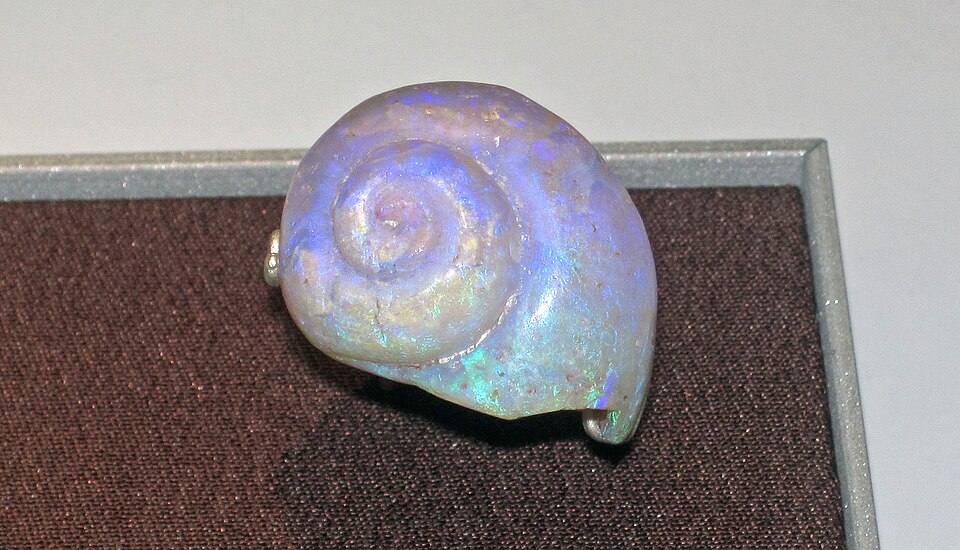
Belemnite
Belemnite
CaCO₃ Properties
- Category
- Fossil
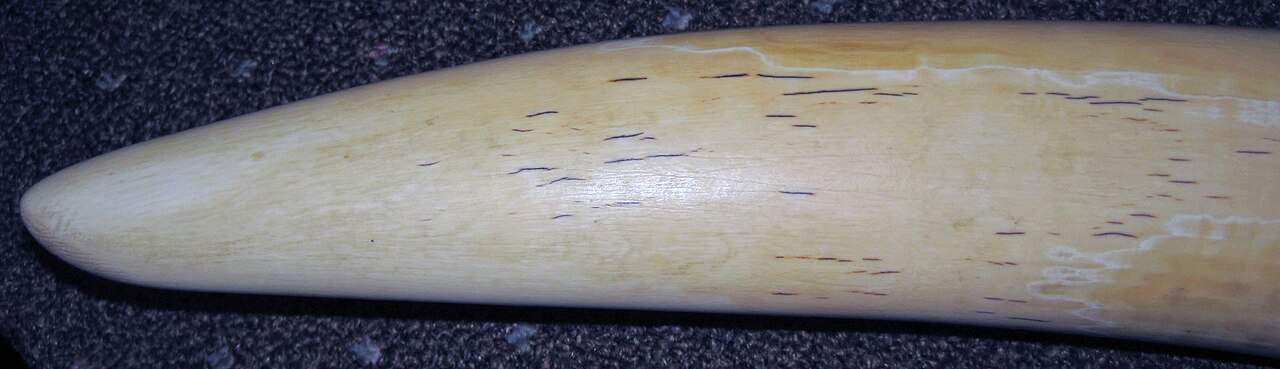
Belemnite is the fossilized internal shell of an extinct ancient marine cephalopod, composed of calcite (CaCO₃) and characterized by a tapered, pointed shape resembling an arrow or spear point. These fossils, dating from the Mesozoic era (approximately 200-66 million years ago), are among the most common finds in marine sedimentary rocks and represent a fascinating window into life in prehistoric oceans.
Belemnites belong to the extinct order Belemnitida, marine cephalopods closely related to modern squid and cuttlefish. The fossilized element we recover is the rostrum or guard, a dense and massive calcareous structure that functioned as a counterweight and protection for the animal. This part has been exceptionally well preserved due to its crystalline composition in low-magnesium calcite, making it extremely resistant to diagenesis. The rostrum is often accompanied by other skeletal parts such as the phragmocone (chambered cavity) and the alveolus (apical cavity), although these latter elements are less frequently preserved.
Belemnites flourished during the Jurassic and Cretaceous periods, dominating Mesozoic oceans until their extinction 66 million years ago. They were active predators that fed on fish and other marine invertebrates, and their abundance in fossil deposits testifies to their crucial ecological role. From a paleontological perspective, belemnites are stratigraphic index fossils of great value: different species characterize specific time intervals, allowing geologists to date and correlate rock layers across different regions of the world. Today, collectors appreciate belemnites for their natural elegance and their educational value in understanding the evolution of marine life.
Belemnites exhibit a composite structure. The rostrum, the most commonly fossilized element, is composed of calcite (CaCO₃) in the orthorhombic crystal system, with a hardness of 3.5 on the Mohs scale. The calcite composing the rostrum is characterized by a radial fibrous texture, with calcite crystal fibers oriented from the nucleus toward the periphery, conferring superior mechanical resistance compared to massive calcite. The density of the material ranges from 2.70 to 2.75 g/cm³.
From a crystallographic perspective, the calcite of the rostrum often exhibits marked birefringence (Δn ≈ 0.172) observable in thin section under a polarizing microscope. Raman spectroscopic analysis reveals the characteristic bands of calcite at approximately 1086, 712, and 280 cm⁻¹. Belemnites are frequently associated with pyrite (FeS₂) and marcasite (FeS₂), which deposit during early diagenesis in anoxic environments. The isotopic composition of oxygen (δ¹⁸O) and carbon (δ¹³C) in the rostrum provides valuable information on Mesozoic ocean temperature and primary biological productivity. Belemnites have been utilized in paleoceanographic studies to reconstruct environmental conditions during the Jurassic and Cretaceous periods.
Mining localities
- Dorset, Inghilterra
- Normandia, Francia
- Baviera, Germania
- Svizzera
- Regione del Giura, Francia
- Spagna (regione della Cordillera Ibérica)
- Russia (bacino di Mosca)
- Argentina (Patagonia)
- Australia (bacino di Canning)
Frequently Asked Questions
How do you identify an authentic belemnite fossil from a fake?
An authentic belemnite displays an elongated, arrow-like pointed shape with a characteristic radial structure visible in cross-section. The fossil must be composed of calcite (CaCO₃) and have a relatively high specific weight; counterfeits are typically made from plaster or plastic and are much lighter. A simple test is to verify that the fossil does not emit a plastic smell and that gently scratching the surface does not produce paint flakes.
Where are belemnites found and how much do they cost?
Belemnites are found mainly in Mesozoic deposits (200-66 million years ago) in Europe, Asia and North America, with particularly rich deposits in England, Germany and France. Prices range from €5-15 for small and common specimens up to €50-200 for large, well-preserved or rare fossils, available from mineral shops, fossil fairs and specialized online marketplaces.
How did a belemnite form and what animal does it represent?
The belemnite is the fossilized rostrum or internal shell of an extinct marine cephalopod related to modern squid, which lived during the Mesozoic era. This internal shell was originally composed of aragonite, which transformed into calcite (CaCO₃) over time, and served as a hydrostatic stabilizer for the animal during swimming.
What is the difference between a belemnite and an ammonite?
A belemnite is the elongated internal shell of a cephalopod, while an ammonite is the spiral external shell of a different cephalopod, visible in its characteristic snail-like shape. Both are Mesozoic marine fossils composed of calcite (CaCO₃), but belemnites are much more common and resistant to erosion, while ammonites are more valued by collectors for their recognizable decorative spiral form.
Entry generated with Claude API (Anthropic) on data extracted from Mindat, RRUFF and Wikipedia. Not yet reviewed by a human expert. Verify data against original sources before citing in formal work.